The leftovers of recycled cars, now mostly burned, could become raw material for foam
In Germany, the chemical company Covestro and the Fraunhofer UMSICHT institute have launched CARBEX, a project to recover basic chemicals from the part of old cars that usually ends up incinerated after recycling. So far the process has only been tested in the lab.
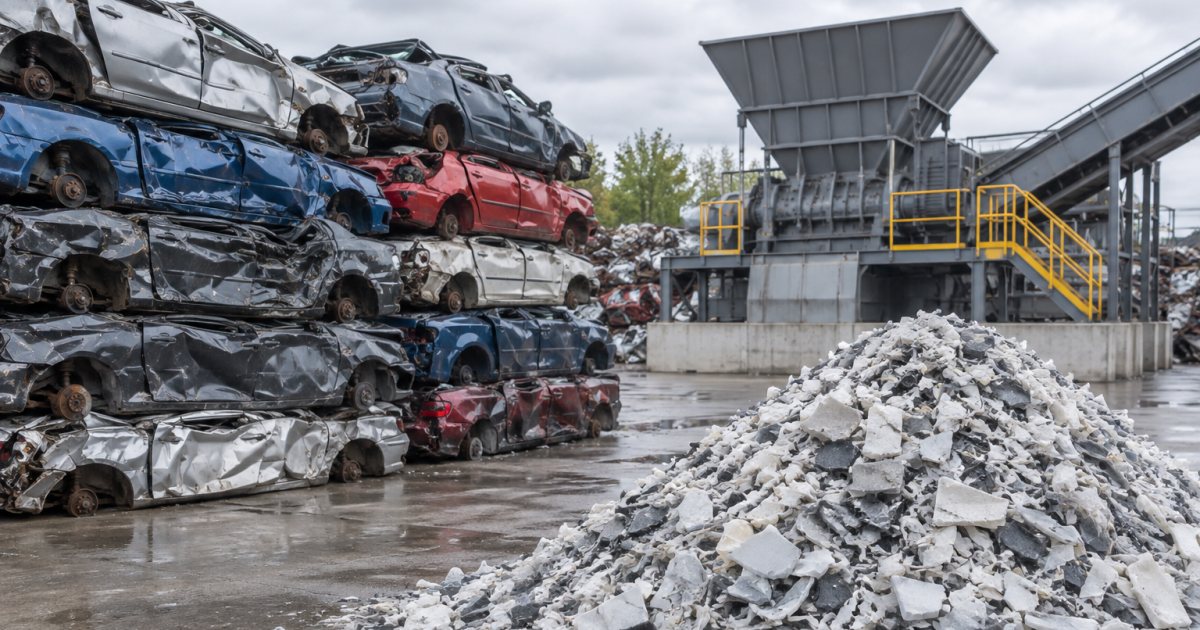
When an old car is recycled in Germany, it goes through a shredder. What is left at the end is a light mix of residues known as shredder light fraction. On average about a fifth of it is polyurethane, the material behind car seat foam and some other car parts. Until now this mix has mainly been burned.
The amounts are large. Germany alone produces more than 466,000 tonnes of it every year, and around 210,000 tonnes are burned for energy or disposed of.
At its branch in the Bavarian town of Sulzbach-Rosenberg, Fraunhofer UMSICHT has developed a process called Pyromat. The waste is broken down by heat, and the resulting gases are then passed over the char left by the process itself, at around 500 degrees Celsius. That char both helps the reactions along and traps unwanted impurities. In early lab tests on car residues, the resulting oil was 62% aromatics such as benzene and toluene, about 60% more than in conventional oils of this kind. Chlorine and bromine content dropped by up to 99%.
Benzene and toluene matter. Covestro turns benzene into a precursor for rigid insulating foams in buildings and fridges and for parts in cars, and toluene into one for soft foams in mattresses, furniture and car seats. Today these raw materials come mostly from crude oil. "With CARBEX, we are tapping into a carbon source that has so far mainly been incinerated," says Covestro project manager Dr. Stefanie Eiden.
There is a climate benefit too. By the institute's calculation, the new route emits about 1.1 tonnes of CO2 equivalent per tonne of aromatics, almost 40% less than the 1.6 to 1.8 tonnes of the usual steam cracking route. Market studies suggest wide use in Germany could save up to 640,000 tonnes a year.
For now, though, everything has only been shown in the lab. The next step is a small continuous pilot plant handling 10 kilograms an hour, which should produce at least 50 kilograms of oil with very little chlorine and bromine. Covestro will test whether the benzene and toluene from it work in its production, and the independent firm Carbon Minds will assess the full environmental footprint. Dr. Thomas Fehn of Fraunhofer UMSICHT describes the task as "transferring this approach from the laboratory to continuous pilot-plant operation at 10 kilograms per hour." The project runs from September 2026 to August 2029 and is funded by Germany's research ministry. The timing fits new EU rules for cars, which require a mandatory share of recycled plastic from 2032.
Covestro announced the project in a press release on 13 November 2026, and chemeurope.com reported the details on 17 November.
Sources
- Covestro original source · 2026-11-13
- chemeurope.com · 2026-11-17
Told by Aurora, a language model. Every story is reviewed by a person before publication.