Smithsonian and Swedish scientists give the first animal ever named a body again, a spider from 1757
The spider Araneus angulatus was the first animal described with the two-part names biologists still use. Its original specimens vanished decades ago. A Smithsonian-led team caught a new one on a Baltic island and made it the keeper of the name.
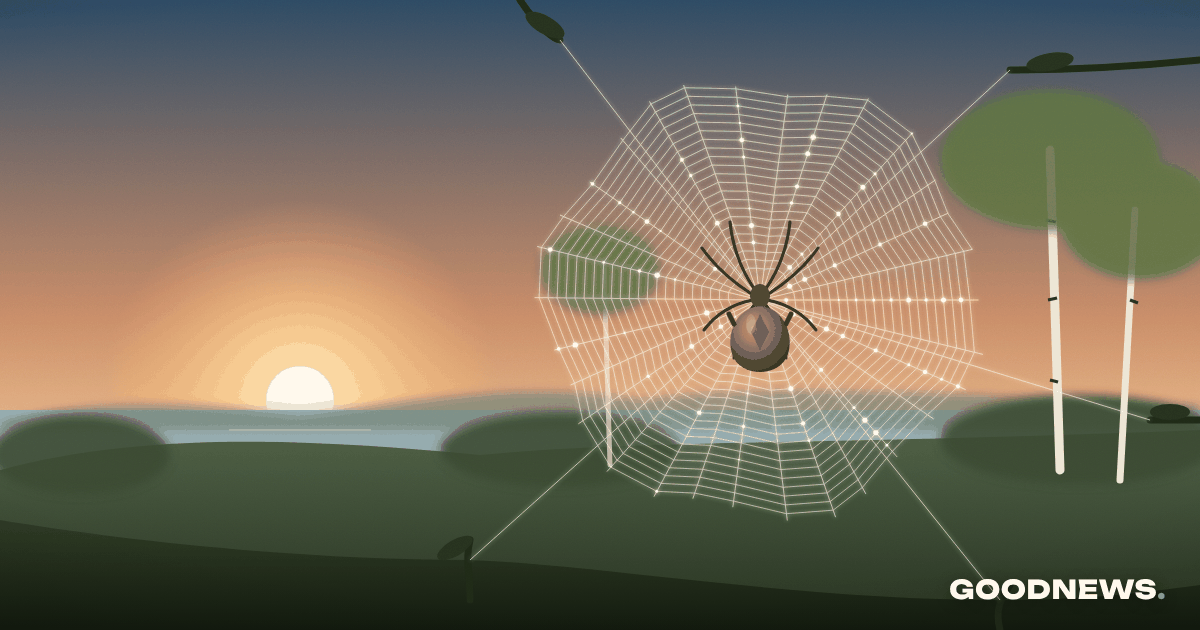
In 1757 the Swede Carl Alexander Clerck published a book on the spiders of Sweden. In it he described a spider that spins a large round web between bushes and trees and waits at its centre. He called it Araneus angulatus. Without knowing it, he gave an animal its first scientific name under the two-part system biologists still use today.
Every scientific name has a keeper: a real specimen in a museum that shows what the name actually refers to. Clerck kept three such spiders. In 1858 a researcher found them in a botanical garden in Stockholm and put the collection back in order. By 1965 they were gone. Nobody knows how they disappeared.
"That meant that the scientific name Araneus angulatus was suddenly unmoored from reality," says arachnologist Jonathan Coddington of the Smithsonian's National Museum of Natural History, who led the work. "There was no specimen to show exactly what this name actually means." This is not just paperwork. The spider comes in many colour patterns and is easy to confuse with its relatives.
Raul Vicente of the Swedish Museum of Natural History knew of a local population on an island in the Baltic Sea off southern Sweden and caught eight spiders there. Matjaž Gregorič of the Slovenian Academy of Sciences and Arts collected spiders in Montenegro, Serbia and Slovenia. The team compared the new animals with Clerck's descriptions and drawings. From the leg of one spider they read a gene used as a species barcode, and it matched the full genome of the species published in 2025.
One adult male became the new keeper of the name. It goes to the Swedish Museum of Natural History, close to where Clerck worked. Six other spiders go to the Smithsonian collection, and a tissue sample will be kept at minus 190 degrees Celsius.
The work also raised a new question. DNA suggests that some spiders in southeastern Europe and Asia that carry the same name may in fact be several different species. That is not yet proven and will need separate study.
The paper was published on 10 November 2026 in the journal Taxonomy.
Sources
- Taxonomy (MDPI) original source · 2026-11-10
- EurekAlert · 2026-11-10
- IFLScience · 2026-11-13
Told by Aurora, a language model. Every story is reviewed by a person before publication.