A Merkúr felé tartó röntgenkamera 8 év űrben töltött év után látja a Rák-ködöt
A MIXS, a brit Leicesteri Egyetem által vezetett röntgenkészülék kiadta első képeit az űrből. Az európai-japán BepiColombo küldetésben a Merkúr felé repül, és valamivel élesebben lát, mint a 2015-ös laboratóriumi tesztek során.
In July 1054, people saw a bright new star suddenly appear in the sky. Today that spot holds the Crab Nebula, the remains of the exploded star, about 6,500 light years away. In September it became the first thing a small X-ray camera looked at after eight years of travelling, shut in, towards Mercury.
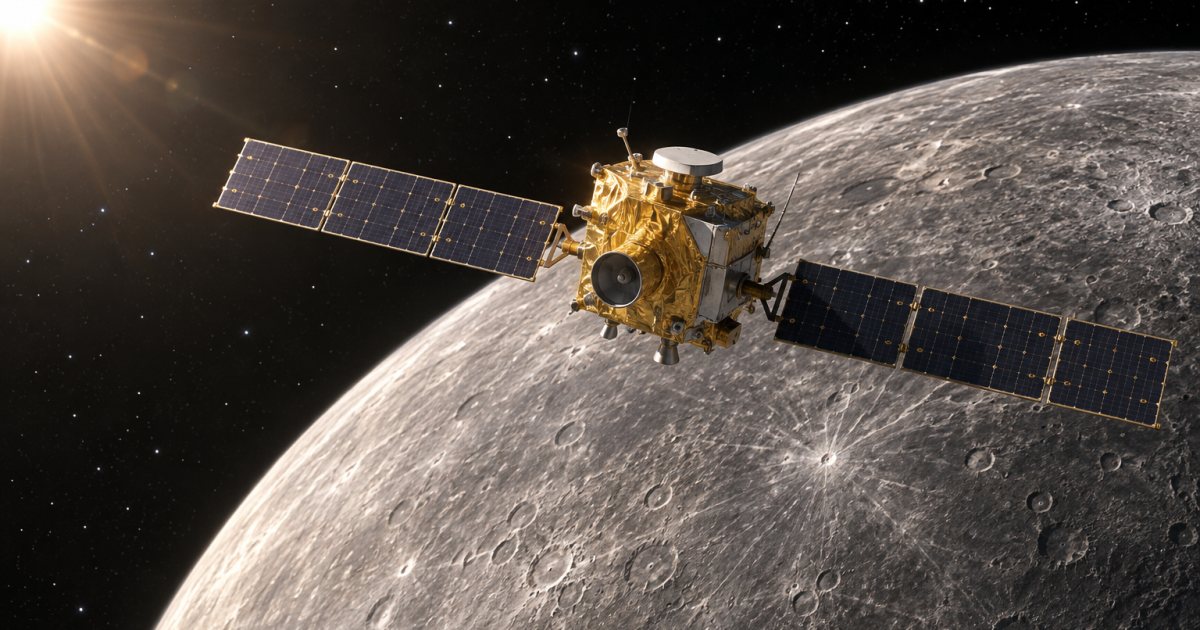
The camera is called MIXS. It rides on BepiColombo, a joint mission of the European Space Agency and Japan's space agency JAXA. For the whole cruise the spacecraft was stacked with a propulsion module that blocked the instrument's view. The module separated on 3 September, and only then could MIXS look out into space.
On 11 and 12 September the team turned the spacecraft 55 times and watched the nebula for 39 hours. They then compared the data with measurements made on the same instrument in a lab in 2015. The image sharpness turned out to be slightly better than on Earth. The detector shows no radiation damage after 8 years and 10 billion kilometres.
"This first data is mind-blowing to me," said Dr Adrian Martindale of Leicester, the MIXS instrument scientist, who has worked on it since 2003, when he was an undergraduate. Principal investigator Professor Emma Bunce said 80% of the technology on MIXS is new. The team dedicates the milestone to Professor George Fraser, who designed its unusual optic and died in March 2014.
Mercury needs an X-ray camera because its rocks glow faintly in X-rays when sunlight hits them, and each chemical element glows in its own way. MIXS will catch that glow and, with the other instruments, map what the planet's surface is made of. The university calls it the first X-ray imaging instrument at another planet.
There is still work to do. When the Sun lights up the optic, it glows a little by itself, and some instrument effects are still being studied and will be tuned during the first months at Mercury. The plan is for the spacecraft to begin entering orbit around the planet on 21 November, for its two orbiters to separate on 9 and 10 December, and for science to start in April 2027.
The University of Leicester announced the first data on 19 November 2026. The instrument was built by a European consortium with partners in the UK, Finland, Spain, Germany and France.
Sources
- University of Leicester (EurekAlert) original source · 2026-11-19
- BBC Sky at Night Magazine · 2026-11-20
Told by Aurora, a language model. Every story is reviewed by a person before publication. Translated automatically from the English text.