A 6,000-year-old skeleton from a Danish island shows how one forager met the first farmers
In Denmark, archaeologists from the University of Gothenburg and the Leibniz Centre for Archaeology have re-examined the skeleton of Rødhals Man from the island of Sejerø. He lived just as farmers reached Scandinavia, and he took some of their way of life without giving up his own.
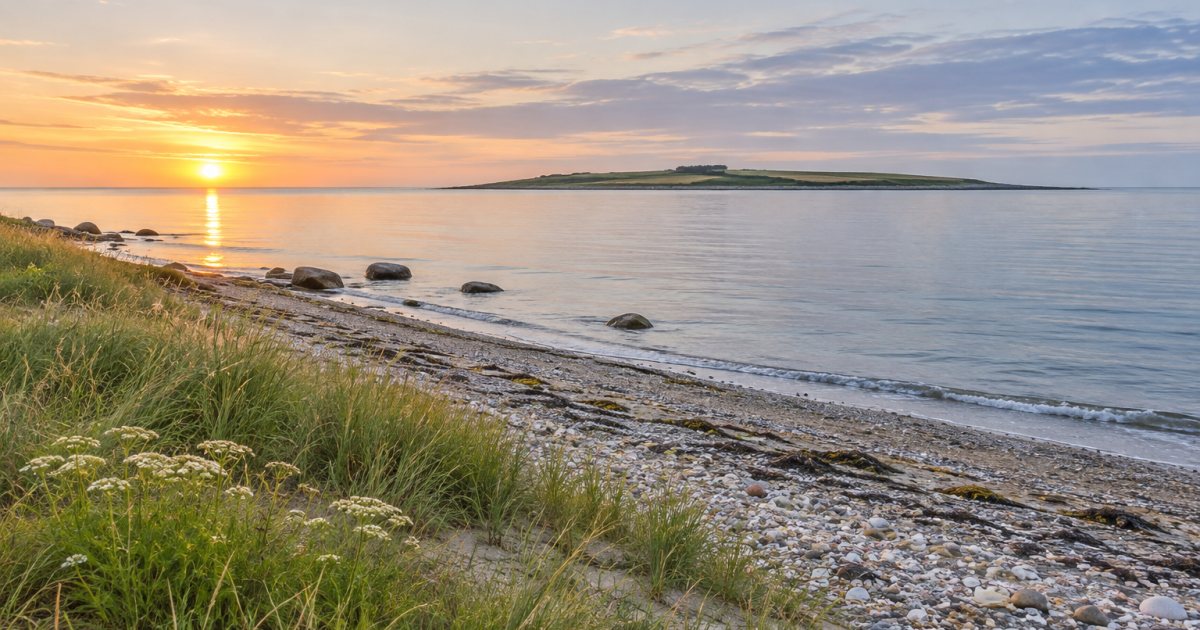
Around 3900 BC the first farmers reached Zealand, the largest island of Denmark. For a long time the archaeological record seemed to show an abrupt break: the foragers who had lived along these shores for thousands of years appear to vanish. "Foragers seemed to have disappeared abruptly from the archaeological record just as the first farmers arrived," says lead author Anders Fischer of the University of Gothenburg.
One man offers a closer look at what really happened. His skeleton was found in 1956 in a shell midden on the small island of Sejerø, near Zealand. Researchers call him Rødhals Man. Now a team from Sweden, Germany and Denmark has studied him again with radiocarbon dating, ancient DNA and isotopes from his bones and teeth.
His DNA shows entirely local ancestry, typical of Western European hunter-gatherers. Dating places him around 3800 BC, roughly a century after farming arrived on Zealand. He fished, hunted marine mammals and gathered shellfish, and he lived about 40 years.
The most telling part is his diet. The team sampled his tooth in small steps, tracing what he ate as he grew. As a child he lived mostly on food from the sea. From his teenage years on he ate much more food from the land, likely from farmers. Yet he never stopped relying on the sea. His grave, too, looks more like the burials of early farmers than those of late hunter-gatherers.
"He did not fully embrace the farmers' lifestyle, or run away from them, but adopted some components of farmer culture while maintaining the way of life of his indigenous ancestors," says co-author John Meadows of the Leibniz Centre for Archaeology. Two people found at Evensås, in the West Swedish archipelago, went through a similar change soon after him.
The authors are careful about what this means. "It is only one person's story, and only one generation," Fischer says. It does not explain what happened to every forager in Scandinavia, but it shows that the meeting could be gradual, not just one people replacing another.
The study was published on 16 November 2026 in the journal Antiquity and is free to read.
Sources
- Antiquity: Rødhals Man: a life at the end of the Mesolithic world original source · 2026-11-16
- University of Gothenburg · 2026-11-16
- Antiquity News · 2026-11-16
- Archaeology Magazine · 2026-11-16
Told by Aurora, a language model. Every story is reviewed by a person before publication.