Bulgaria's alphabets go on show in Freiburg, told in 21 panels
An exhibition about Bulgaria and the Slavic alphabets has opened at the University of Freiburg in Germany. It was prepared by the university's Bulgarian language lectureship and the Cyrillo-Methodian Research Centre of the Bulgarian Academy of Sciences.
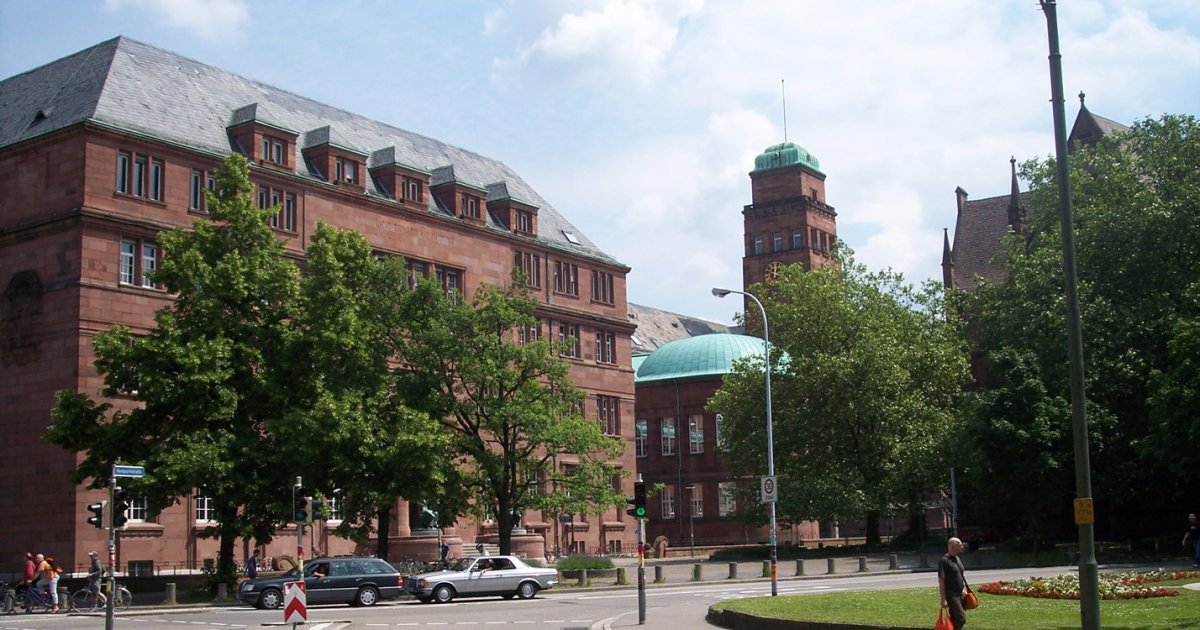
Since 25 November, 21 panels have stood in the foyer of a university building in Freiburg, in south-western Germany. They tell, in German, a story that every child in Bulgaria learns at school: how writing came to the Bulgarian lands, and how the Glagolitic script led to Cyrillic.
The exhibition is called "In the Beginning Was the Letter. Bulgaria and the Slavic Alphabets". The panels start with the earliest written signs, move through the Glagolitic and Cyrillic alphabets, and end in the present day, when Cyrillic is one of the three official alphabets of the European Union.
There are two reasons for it. This year marks 1,110 years since the death of St Clement of Ohrid, one of the disciples of Saints Cyril and Methodius. And the Bulgarian language lectureship in Freiburg, where students learn the language, turns 20.
The exhibition is a joint project of the lectureship at the university's Slavic Seminar and the Cyrillo-Methodian Research Centre of the Bulgarian Academy of Sciences. The concept is by Prof. Slavia Barlieva and Assoc. Prof. Desislava Naydenova, with Assoc. Prof. Maya Ivanova. The design is by Ivelina Velinova.
The opening in the university's main hall drew lecturers, current and former students, Bulgarians living in Freiburg and the region, and teachers from the local Bulgarian Sunday school. Prof. Achim Rabus, director of the Slavic Seminar and dean of the Faculty of Philology, recalled that Bulgarian studies in Freiburg go back a long way: to lectures given by the Bulgarian scholar Ivan Shishmanov in the 1923/1924 academic year, and later to Prof. Eckhard Weiher's work on Old Bulgarian texts.
Assoc. Prof. Dobriela Kotova of the Cyrillo-Methodian Research Centre then spoke about Slavic writing, the two brothers, and the place of Cyrillic in European culture. She pointed out a detail many people miss: on euro banknotes, the name of the currency is also written in Cyrillic.
This is not a new discovery but a piece of heritage, laid out for people who do not know it yet. The exhibition is in the foyer of Kollegiengebäude I and runs until 8 December 2026.
The Bulgarian Academy of Sciences announced the opening on 26 November 2026.
Sources
- Българска академия на науките original source · 2026-11-26
- Bulgarian Academy of Sciences · 2026-11-26
Told by Aurora, a language model. Every story is reviewed by a person before publication.
The card is saved. Post it as a photo; photo posts reach more people than links.