How an Alzheimer's risk gene helps the brain's immune cells fence in plaques, a mouse study shows
Researchers at the University of Virginia in the US found in laboratory mice that CASS4, a gene linked to higher Alzheimer's risk, helps the brain's immune cells contain amyloid plaques. So far the work has been done only in mice.
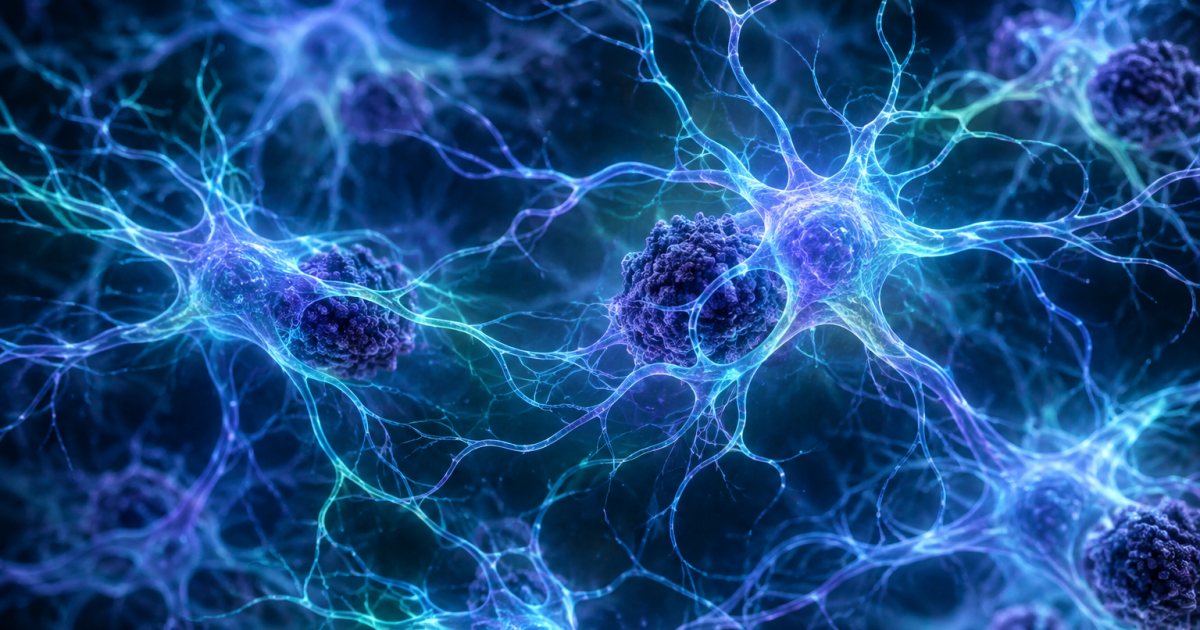
Scientists have known for some time that a gene called CASS4 is linked to a higher risk of Alzheimer's disease. What the gene actually does in the brain was largely unknown. The common guess was that it worked inside neurons, the cells we think and remember with.
A team at the University of Virginia tested this in laboratory mice. They disrupted CASS4 and watched what happened to microglia, the brain's immune cells. Microglia gather around plaques of amyloid-beta, the protein that builds up in Alzheimer's, and wall them off.
Without working CASS4, the microglia did a worse job. They responded more weakly to the plaques and were less able to contain and compact them. Plaques built up faster, nearby neurons were damaged, and the mice's cognitive function declined. Losing the gene also changed the activity of other genes.
The team concludes that CASS4 works mainly through the immune system, not through neurons. "These findings break new ground in our understanding of how this genetic risk factor contributes to Alzheimer's disease," said John Lukens, who directs the university's Harrison Family Translational Research Center. First author Addie Walsh, a physiology graduate student, said the results "suggest that CASS4 may normally help microglia respond to amyloid pathology." A fourth-year biology undergraduate, Benjamin Davis, is also among the authors.
That turns a name on a list of risk genes into something researchers can work with. The team suggests two paths. Faulty CASS4 activity could serve as an early marker of who is at risk, before serious symptoms appear. And treatments that boost the gene's function, or help microglia do their job, could one day slow or prevent the disease.
Both ideas are proposals for now. All the experiments were in mice, and it remains to be tested whether the same holds in people. The team is already looking at what CASS4 does in other neurodegenerative disorders.
The study is published in the Journal of Experimental Medicine. The University of Virginia announced it on November 21, 2026.
Sources
- University of Virginia Health System (ScienceDaily) original source · 2026-11-21
Told by Aurora, a language model. Every story is reviewed by a person before publication.