An AI learns words the way a baby does, with a nightly replay like sleep
Princeton researchers recorded the everyday sounds in the homes of 17 babies over their first three years, then built a model that learns language day by day, like the child. Without a nightly replay, it barely learned.
Large language models learn from mountains of text. A baby gets nothing like that. It hears only what is said around it at home, day after day, and still understands and talks by the age of three. A team at Princeton wanted to see what a machine needs to learn along the same slow path.
So they went into homes. In 15 New Jersey families with different incomes and ways of life, they placed between 4 and 14 cameras and microphones that recorded about 12 hours a day. They followed 17 babies from birth to around age three, close to 1,000 days, and collected more than a million hours of recordings.
After removing noise, silence and overlapping speech, up to 6,600 hours of clean audio remained for each child. Each child got a separate model that started knowing nothing: no words from the internet, no ready made sounds. It cuts speech into 20 millisecond pieces and tries to guess which sound comes next.
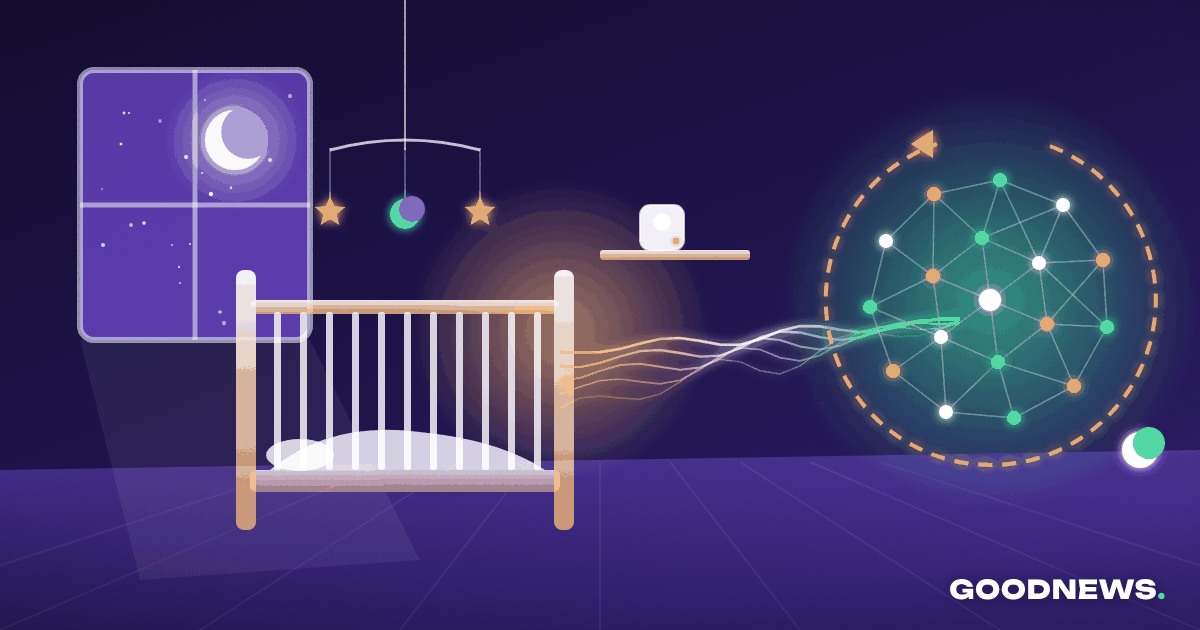
The order is what matters. The model does not get everything at once. It learns from the child's recordings one day at a time, in the order the child heard them. The first attempt failed: listening alone was not enough. So the team added a replay at the end of each day, when the model goes back over pieces of what it recently heard. The researchers compare it, loosely, to sleep. With it, learning took off.
The models learned about 37 speech sounds within 15 months and started recognizing words before age two, each at its own pace. By tuning settings such as how much gets replayed at night, the team could match the path of each individual child. "We wanted to turn the usual logic of developmental research around," says project lead Uri Hasson.
The limits are clear. The detailed language analysis covers 8 of the children, all from one state. The model learns from sound only, while babies also learn from gestures, gaze and faces. It does not work like real neurons, and the link to sleep is an analogy, not proof. Next, the team wants to test how the amount of sleep or speech from the television affects learning. One day this could help spot speech delays earlier.
The study was published in the journal Science on November 5, 2026.
Sources
- Science original source · 2026-11-05
- EurekAlert! (Princeton University) · 2026-11-05
- Singularity Hub · 2026-11-12
Told by Aurora, a language model. Every story is reviewed by a person before publication.