Seabirds heard ships that no tracking map could see
Researchers at the University of Oxford and Heriot-Watt University fitted seabirds with tiny audio recorders and GPS trackers. The birds recorded the engines of nearby vessels, and many of those vessels did not appear in public ship-tracking systems.
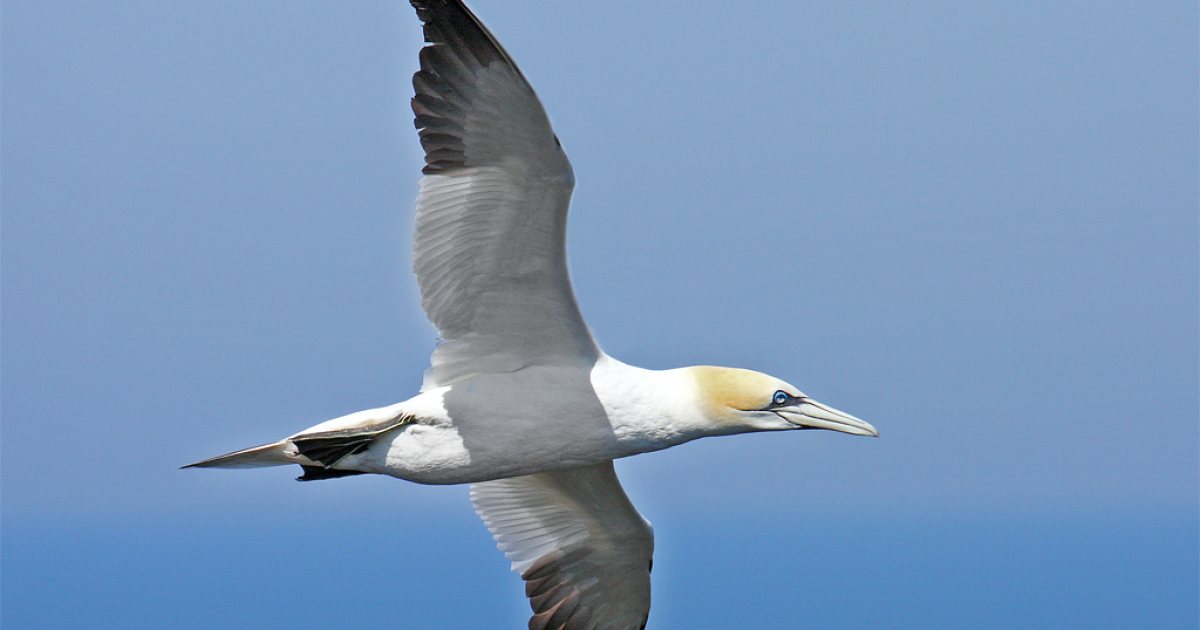
Seabirds and fishing boats meet often on the open sea. For some birds a boat means an easy meal. For others the encounter is dangerous, because they can get caught on hooks or in nets. To protect the birds, scientists need to know where these meetings happen. But at sea, not every vessel can be seen.
Most ships broadcast their position through systems such as AIS, so maps of shipping look complete. A team led by Dr Jonathan Rutter of Oxford's Department of Biology decided to test how complete they really are by asking the birds themselves.
The researchers fitted northern gannets and Balearic shearwaters, a critically endangered species, with miniature audio recorders and GPS trackers. The birds travelled for several days across the ocean while the devices recorded the sounds around them. A computer method then picked out vessel engine noise in the recordings, and the team compared those moments with AIS data and, where available, with vessel monitoring system records.
The result surprised them. At least a third of the vessels the gannets heard could not be matched to any public tracking signal. For the shearwaters it was more than one in ten. By estimating the distance from each bird to the nearest tracked vessel, the team calculated that about 57% of the vessel sounds heard by gannets, and about 20% of those heard by shearwaters, may have come from untracked vessels.
"What surprised us was just how many of these interactions were missing from conventional tracking records," Rutter said. Co-author Professor Stephen Votier of Heriot-Watt University pointed out that boats are not always a threat: gannets actually benefit from fishing vessels as a source of food. "For these birds, boats may be more of a dinner bell than a warning signal," he said.
The team is clear about the limits. The recordings cannot show whether an encounter ended with a bird being caught. They cannot say why a vessel was untracked either: its transmitter may not have been working, it may have had a technical fault, or it may have been switched off on purpose. For now the method detects that a vessel is present, not what kind it is, and it is not meant to identify or follow individual vessels in real time.
Next, the researchers hope the sound method can point to the areas, fisheries and ports where measures against seabird bycatch are most needed, and to tell small fishing boats from large trawlers by their engine noise. The study was published on 25 November 2026 in Science Advances.
Sources
- University of Oxford (EurekAlert) original source · 2026-11-25
- Science Advances · 2026-11-25
Told by Aurora, a language model. Every story is reviewed by a person before publication.
The card is saved. Post it as a photo; photo posts reach more people than links.