Birds respond faster to predators where more species live together
A team led by Xi'an Jiaotong-Liverpool University in China ran several hundred experiments in ten nature reserves in eastern China. The more bird species that raise the alarm about a predator, the more birds respond, and the faster they do it.
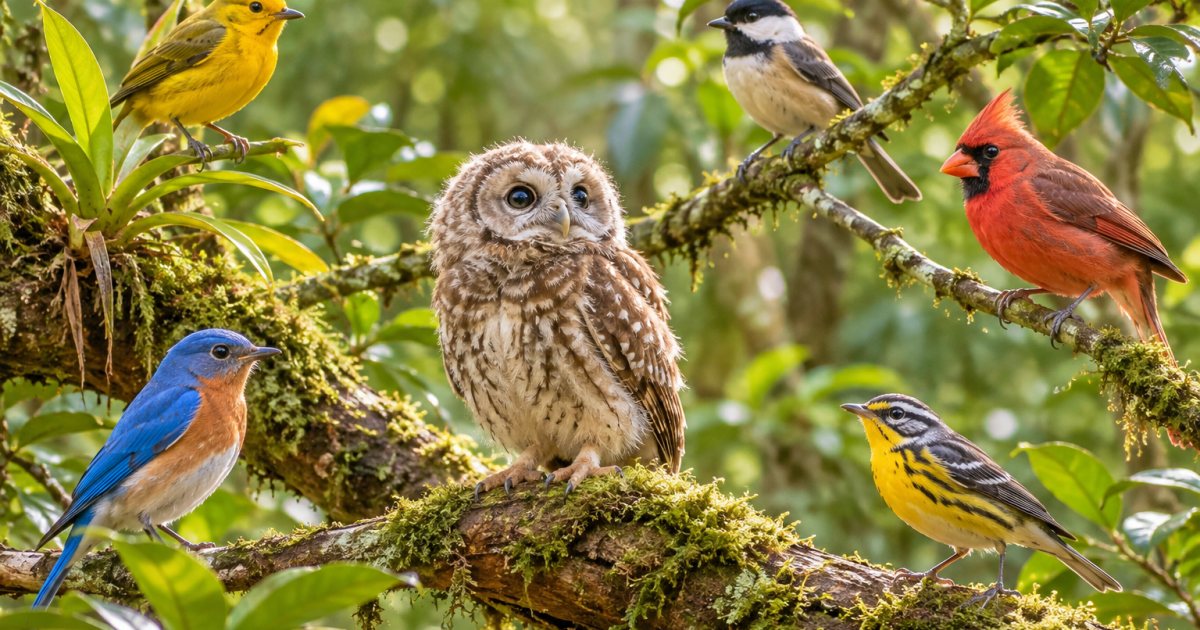
When small birds spot an owl sitting on a branch, they often do not flee. They gather around it and make a racket to drive it away and warn others. Biologists call this mobbing. One open question was whether it matters how many different species join the chorus.
A team with first author Agnishikhe Kumar of Xi'an Jiaotong-Liverpool University in China set out to test this in the field. Working with colleagues from the United Kingdom, France and the United States, they ran several hundred experiments across ten nature reserves in eastern China.
First, the researchers showed birds models of predators: a hawk in flight and a sitting owl. This let them record how the birds answered with alarm calls and with mobbing calls.
Then they played those recordings back through speakers. Each recording held the voices of a different number of species, from one to eight. The more species in the recording, the larger the group of birds that gathered, the faster they responded and the more calls they gave in return.
"The more species that signal in mobbing contexts, the larger the response," the authors write. In their view this shows that species diversity shapes how information travels through nature.
The finding has a flip side. The authors caution that where species are lost, birds may respond more weakly to danger, because less information reaches them from their neighbours.
The experiments used predator models and recordings, and were done only in eastern China. The team says the next step is to see whether the same holds for other kinds of information, such as food and living space, and in other animals such as insects.
The study was published on 24 November 2026 in the journal PLOS Biology.
Sources
- PLOS Biology original source · 2026-11-24
- EurekAlert · 2026-11-24
Told by Aurora, a language model. Every story is reviewed by a person before publication.