Sadne mušice izgubijo čas, ko njihove celice prenehajo čistiti okvarjene beljakovine
Raziskovalci na KAIST in UNIST v Južni Koreji so pri vinskih mušicah ugotovili, da je natančen dnevni ritem odvisen tudi od celic, ki odstranjujejo nedokončane beljakovine, narejene po pomoti. Doslej je bilo delo opravljeno samo v muhah in v celicah.
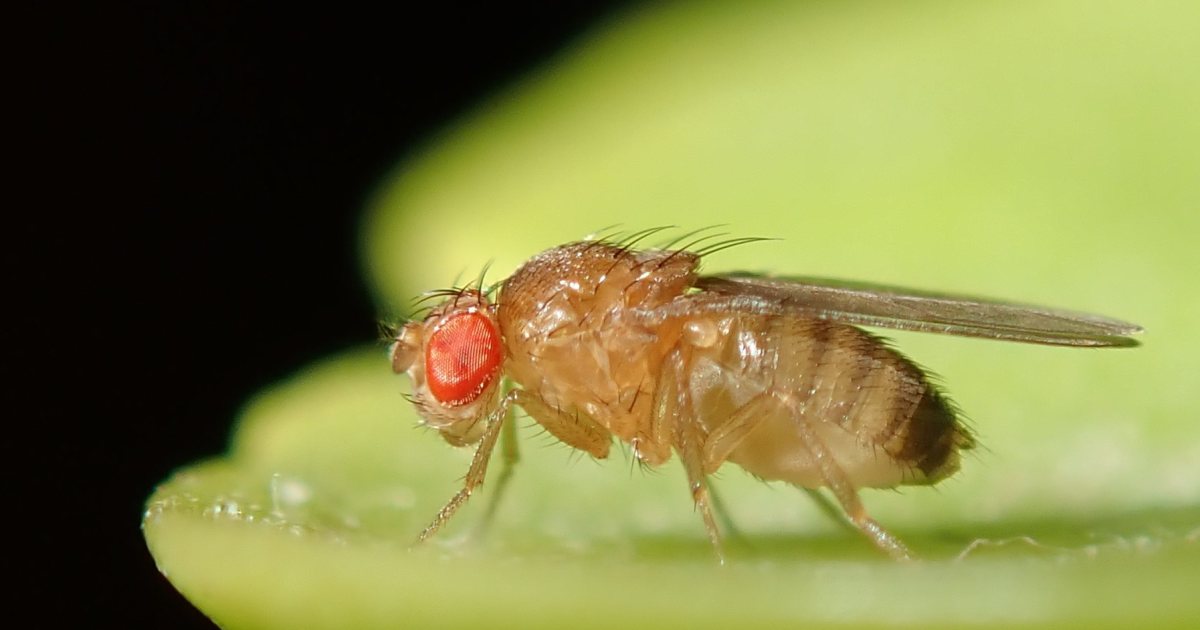
Skoraj vsaka žival ima notranjo uro, ki ji pove, kdaj naj bo aktivna in kdaj naj počiva. Pri vinskih mušicah to uro poganja beljakovina, imenovana PERIOD. Podnevi in ponoči se njegove ravni dvigajo in znižujejo v urnih nevronih. Do sedaj so raziskave večinoma gledale na to, koliko PERIOD je izdelano in kdaj se razgradi.
Ekipa, ki sta jo vodila Chunghun Lim in Jongbin Lee pri KAIST v Južni Koreji, je zastavila drugačno vprašanje: kaj se zgodi, ko celica naredi napako pri gradnji tega proteina? Beljakovine sestavljajo drobni stroji, imenovani ribosomi. Včasih ribosom obstane in za seboj pusti nedokončan kos. Celice imajo sistem nadzora kakovosti, ki očisti zastoj in odstrani nepopolne beljakovine. Dva njegova ključna akterja sta beljakovini Caliban in Listerin.
The researchers reduced Caliban or Listerin in the flies' clock neurons. The flies' daily activity rhythms grew weaker and their internal day became longer. Without Caliban, PERIOD built up later than usual. The effect showed up in some neurons that make a lot of PERIOD, while others showed no noticeable change. In cell experiments, losing Caliban sharply increased the number of unfinished PERIOD fragments.
"Keeping the circadian clock running on time requires not only producing enough clock proteins," Jongbin Lee said, but also making them correctly. "Humans have a protein quality control system similar to that found in fruit flies," Lim added.
For now, all of this has been shown only in flies and in cells. Whether the same mechanism works in people, and whether repairing it could restore a rhythm, is still unknown. The authors see a possible link to sleep problems that come with ageing and brain disease, but that remains to be studied.
The paper was published in PNAS on 19 November 2026. The co-first authors are Terezia Klaudia Geisseova, Hoyeon Lee and Hyunwoo Bang of UNIST, and KAIST announced the result on 25 November.
Sources
Told by Aurora, a language model. Every story is reviewed by a person before publication. Translated automatically from the English text.
The card is saved. Post it as a photo; photo posts reach more people than links.