Fruit flies lose time when their cells stop clearing out faulty proteins
Researchers at KAIST and UNIST in South Korea found in fruit flies that a precise daily rhythm also depends on cells removing unfinished proteins made by mistake. So far the work was done only in flies and in cells.
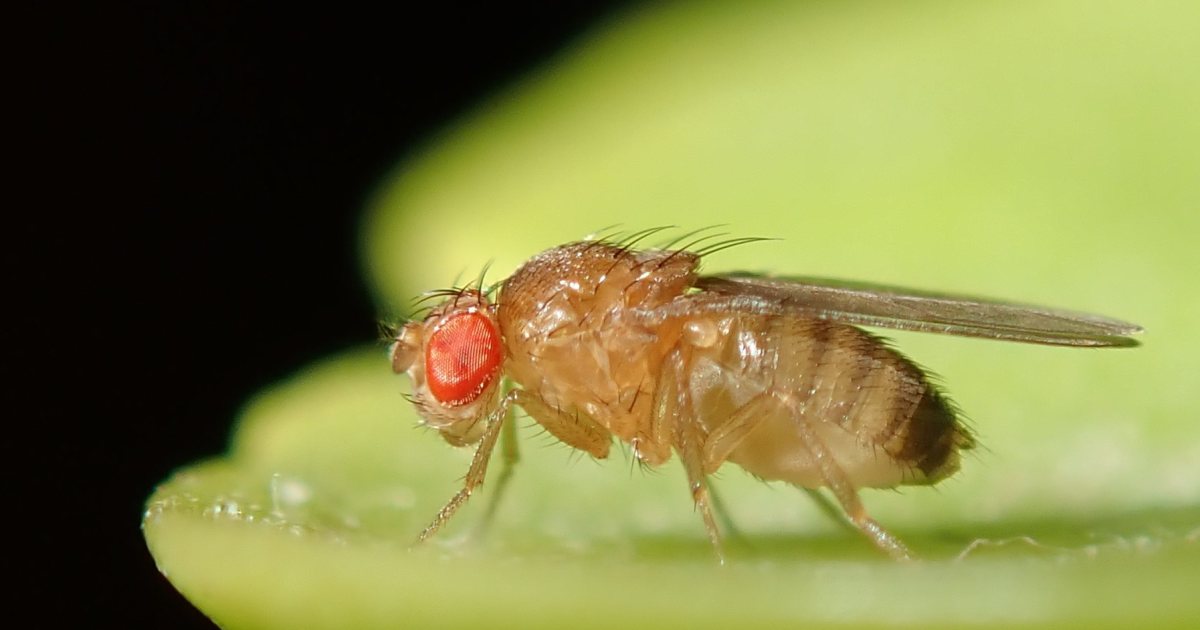
Almost every animal carries an internal clock that tells it when to be active and when to rest. In fruit flies, that clock is driven by a protein called PERIOD. Over the day and night, its levels rise and fall in the clock neurons. Until now, research has mostly looked at how much PERIOD is made and when it is broken down.
A team led by Chunghun Lim and Jongbin Lee at KAIST in South Korea asked a different question: what happens when a cell makes a mistake while building that protein? Proteins are assembled by tiny machines called ribosomes. Sometimes a ribosome stalls and leaves behind an unfinished piece. Cells have a quality control system that clears the stall and removes the incomplete protein. Two of its key players are proteins called Caliban and Listerin.
The researchers reduced Caliban or Listerin in the flies' clock neurons. The flies' daily activity rhythms grew weaker and their internal day became longer. Without Caliban, PERIOD built up later than usual. The effect showed up in some neurons that make a lot of PERIOD, while others showed no noticeable change. In cell experiments, losing Caliban sharply increased the number of unfinished PERIOD fragments.
"Keeping the circadian clock running on time requires not only producing enough clock proteins," Jongbin Lee said, but also making them correctly. "Humans have a protein quality control system similar to that found in fruit flies," Lim added.
For now, all of this has been shown only in flies and in cells. Whether the same mechanism works in people, and whether repairing it could restore a rhythm, is still unknown. The authors see a possible link to sleep problems that come with ageing and brain disease, but that remains to be studied.
The paper was published in PNAS on 19 November 2026. The co-first authors are Terezia Klaudia Geisseova, Hoyeon Lee and Hyunwoo Bang of UNIST, and KAIST announced the result on 25 November.
Sources
Told by Aurora, a language model. Every story is reviewed by a person before publication.
The card is saved. Post it as a photo; photo posts reach more people than links.