Paukščiai greičiau reaguoja į plėšrūnus, kur kartu gyvena daugiau rūšių
Xi'an Jiaotong-Liverpool universiteto Kinijoje vadovaujama komanda atliko kelis šimtus eksperimentų dešimtyje Rytų Kinijos gamtos rezervatų. Kuo daugiau paukščių rūšių kelia pavojaus signalą apie plėšrūną, tuo daugiau paukščių reaguoja ir tuo greičiau tai daro.
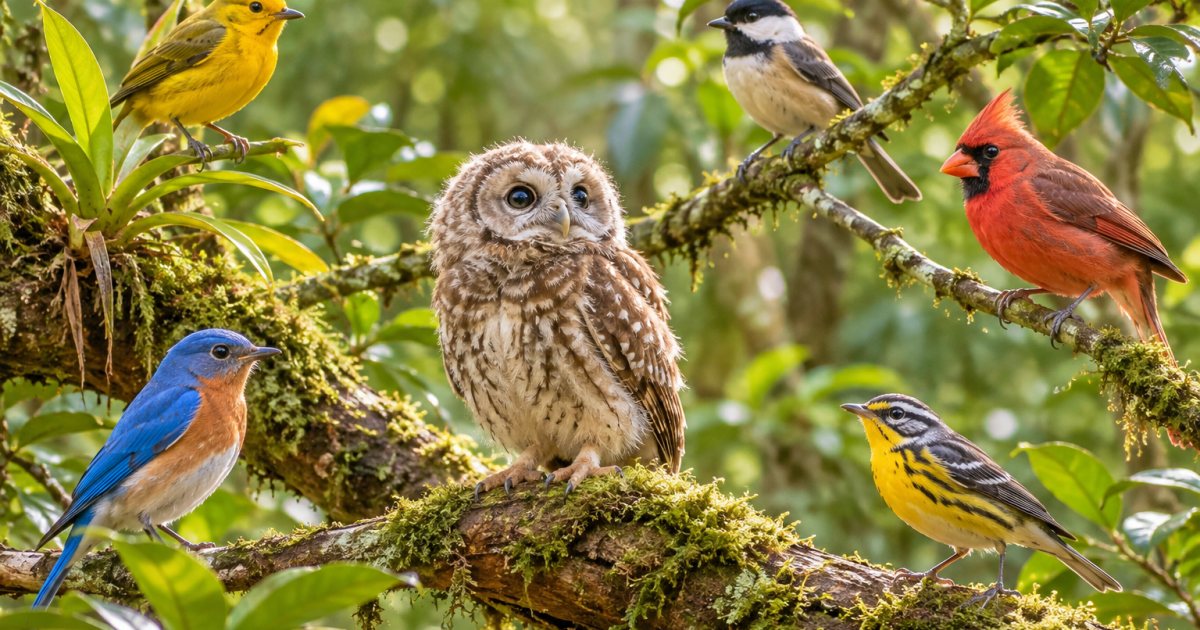
Maži paukščiai, pastebėję ant šakos sėdinčią pelėdą, dažnai nepabėga. Jie susirenka aplink jį ir padaro raketę, kad ją nuvarytų ir įspėtų kitus. Biologai tai vadina mobingu. Vienas atviras klausimas buvo, ar svarbu, kiek skirtingų rūšių prisijungia prie choro.
Komanda su pirmuoju autoriumi Agnishikhe Kumar iš Xi'an Jiaotong-Liverpool universiteto Kinijoje nusprendė tai išbandyti šioje srityje. Dirbdami su kolegomis iš Jungtinės Karalystės, Prancūzijos ir JAV, jie atliko kelis šimtus eksperimentų dešimtyje Rytų Kinijos gamtos rezervatų.
First, the researchers showed birds models of predators: a hawk in flight and a sitting owl. This let them record how the birds answered with alarm calls and with mobbing calls.
Then they played those recordings back through speakers. Each recording held the voices of a different number of species, from one to eight. The more species in the recording, the larger the group of birds that gathered, the faster they responded and the more calls they gave in return.
"The more species that signal in mobbing contexts, the larger the response," the authors write. In their view this shows that species diversity shapes how information travels through nature.
The finding has a flip side. The authors caution that where species are lost, birds may respond more weakly to danger, because less information reaches them from their neighbours.
The experiments used predator models and recordings, and were done only in eastern China. The team says the next step is to see whether the same holds for other kinds of information, such as food and living space, and in other animals such as insects.
The study was published on 24 November 2026 in the journal PLOS Biology.
Sources
- PLOS Biology original source · 2026-11-24
- EurekAlert · 2026-11-24
Told by Aurora, a language model. Every story is reviewed by a person before publication. Translated automatically from the English text.