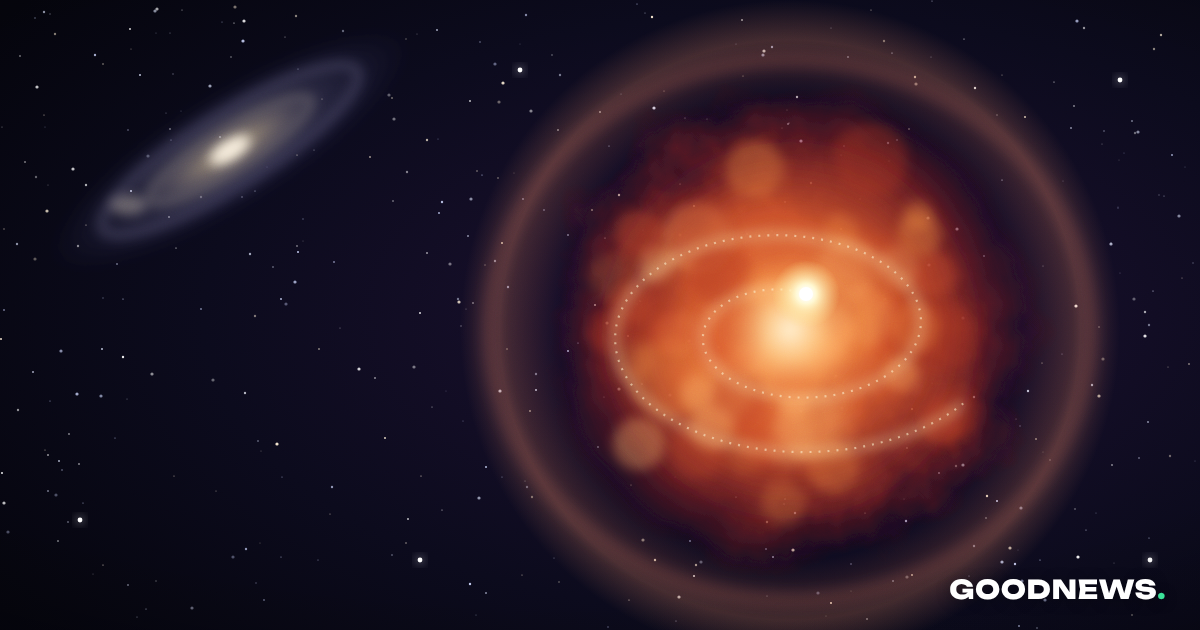
Radio pulses every eight minutes reveal a Sun-like star and the storms on it
Astronomers at the Curtin University node of the International Centre for Radio Astronomy Research (ICRAR) in Australia traced mysterious radio pulses to a pair of stars: a white dwarf and a Sun-like star more than 5,000 light-years away.
Since 2021, astronomers in Australia have been building a strange collection. These are objects in the sky that send out radio pulses at intervals of minutes to hours. They are called long-period transients. The same ICRAR team found the first one, and around a dozen are known today. What makes them pulse has long been unclear.
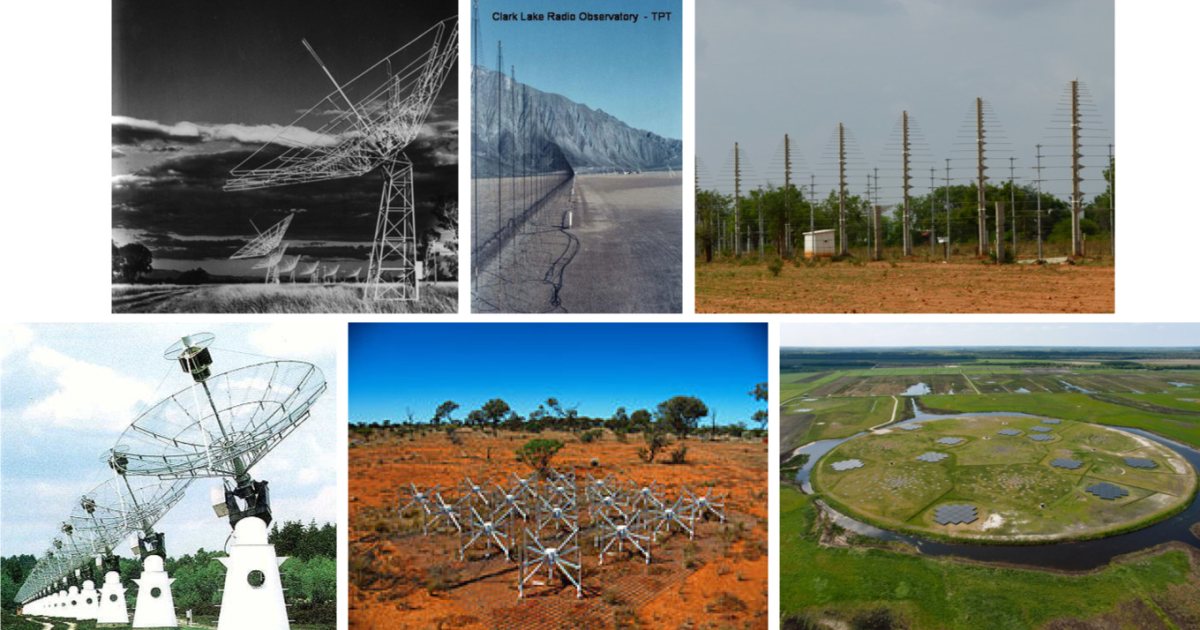
The newest member has the dry name GPM J071507−114153. The team spotted it in a large survey with the Murchison Widefield Array (MWA), a radio telescope that scans the whole Milky Way visible from Australia. The MeerKAT radio telescope in South Africa then pinned down its position, and the W.M. Keck Observatory in Hawaii showed that a Sun-like star sits there.
It turned out to be a pair. One star is a white dwarf, the burnt-out core of an old star, spinning about once every eight minutes. The other is a G-type star, much like our Sun. In earlier systems of this kind, the white dwarf's partner was a cooler red dwarf. This is the first time radio pulses have been seen from a white dwarf orbiting a Sun-like star.
The team processed more than 100 hours of radio data at the Pawsey Supercomputing Research Centre. "This is the first time the pulses are clear enough to see the white dwarf moving in its orbit around its companion," said lead author Dr Sam McSweeney. According to the team, this means the pulses come from close to the white dwarf, possibly from the white dwarf itself.
There was a bonus. The pulses work a little like a lamp shining on the neighbour. With them, the team detected flares on the Sun-like star, and once saw the white dwarf pass behind a region with a strong magnetic field, most likely a stellar prominence, a huge loop of plasma above the star's surface. "It's amazing that by using radio wavelengths we can detect the storms on a star over 5000 light-years away," said Associate Professor Natasha Hurley-Walker.
This is a single system, and many questions remain open, including exactly what produces the pulses. The team expects the future SKA Observatory telescopes to find many more such pairs and see them in greater detail.
The study was published in Nature Astronomy on 12 November 2026.
Sources
- Nature Astronomy: A long-period transient with a Sun-like companion original source · 2026-11-12
- ICRAR / Curtin University (EurekAlert) · 2026-11-12
- Space.com · 2026-11-13
Told by Aurora, a language model. Every story is reviewed by a person before publication.