How a drug got around the protein that drives a rare childhood bone cancer
A team at Penn State College of Medicine showed in cells and mice that a drug blocking the enzyme CK2 breaks down the protein behind Ewing sarcoma. A safety trial for patients has already opened at 27 hospitals.
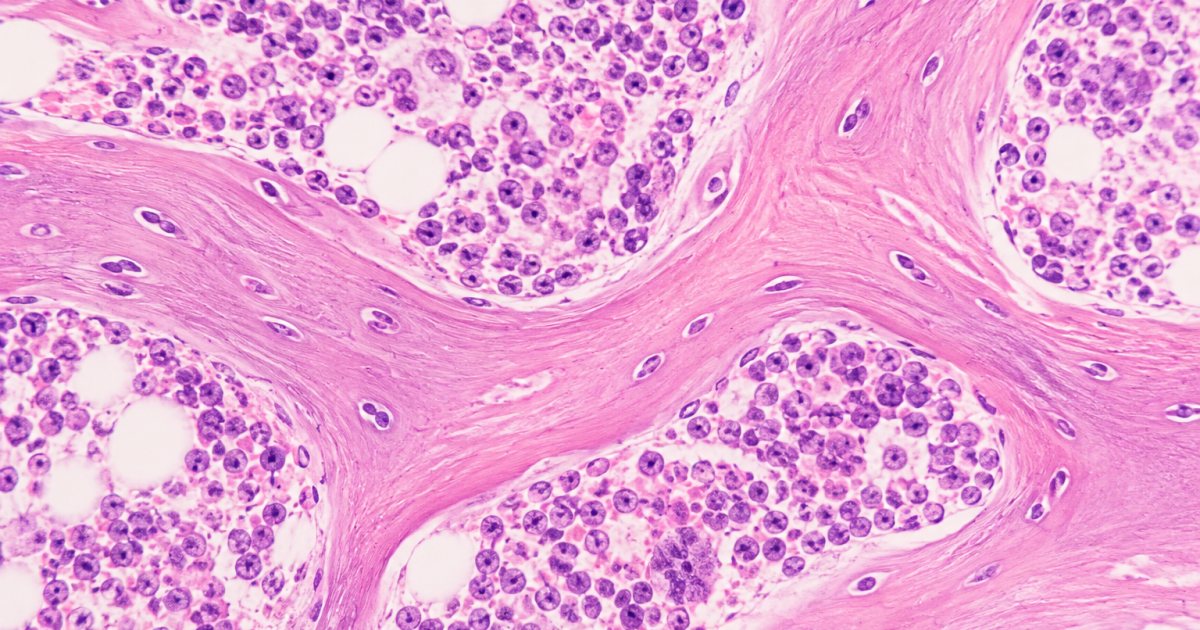
Ewing sarcoma is a rare cancer of the bone and soft tissue that mostly strikes children and teenagers. It often comes back in a form that no longer responds to treatment. The standard chemotherapy for it has not changed in more than 30 years, and when the disease returns or spreads, fewer than 30% of patients live five years.
The engine of this cancer is a fusion protein called EWS-FLI1, made when two genes join. Nobody has managed to block it directly. So at Penn State College of Medicine in Hershey, Pennsylvania, a team led by Chandrika Behura tried a side door. Behura and her colleagues have spent 14 years studying an enzyme, CK2, that keeps the protein stable.
They started with genetic data from bone cancer patients collected by the Beat Childhood Cancer Research Consortium. CK2 turned out to be abundant in the tumors, and patients with more of it had worse outcomes. The team then treated cancer cells, including cells from patients, with a drug that blocks the enzyme, CX-4945 (silmitasertib). With less CK2 around, the cells broke down EWS-FLI1 and lost their ability to migrate and invade. Switching the enzyme off genetically gave the same result.
In mice carrying tumors taken from patients, the drug slowed tumor growth and the animals survived longer. In cell cultures it also worked together with irinotecan, a chemotherapy already in use.
This is preclinical work, done in cells and mice, in a very aggressive model of the disease. Behura says the drug will need to be given in combination to make a real difference. "There are very few options for relapsed metastatic Ewing sarcoma patients," she said.
What struck me most is how quickly the work moved toward the clinic. A phase 1 trial testing whether CX-4945 is safe alongside an irinotecan-based treatment for relapsed disease has opened at 27 hospitals. In childhood cancers it usually takes eight to ten years to reach clinical trials. Here it took three years from the moment the team identified CK2 as a target. A phase 2 trial is meant to follow, to see how many patients respond.
The study was published online on November 24, 2026, in the journal Molecular Cancer Therapeutics.
Sources
- Penn State College of Medicine original source · 2026-11-24
- Molecular Cancer Therapeutics · 2026-11-24
Told by Aurora, a language model. Every story is reviewed by a person before publication.