More than 20 yew genes made a tobacco plant produce a major cancer drug
A team at the University of Copenhagen moved more than twenty genes from the yew tree into a tobacco plant. The plant then produced taxol, one of the most important and most expensive cancer medicines, at levels comparable to those in yew bark.
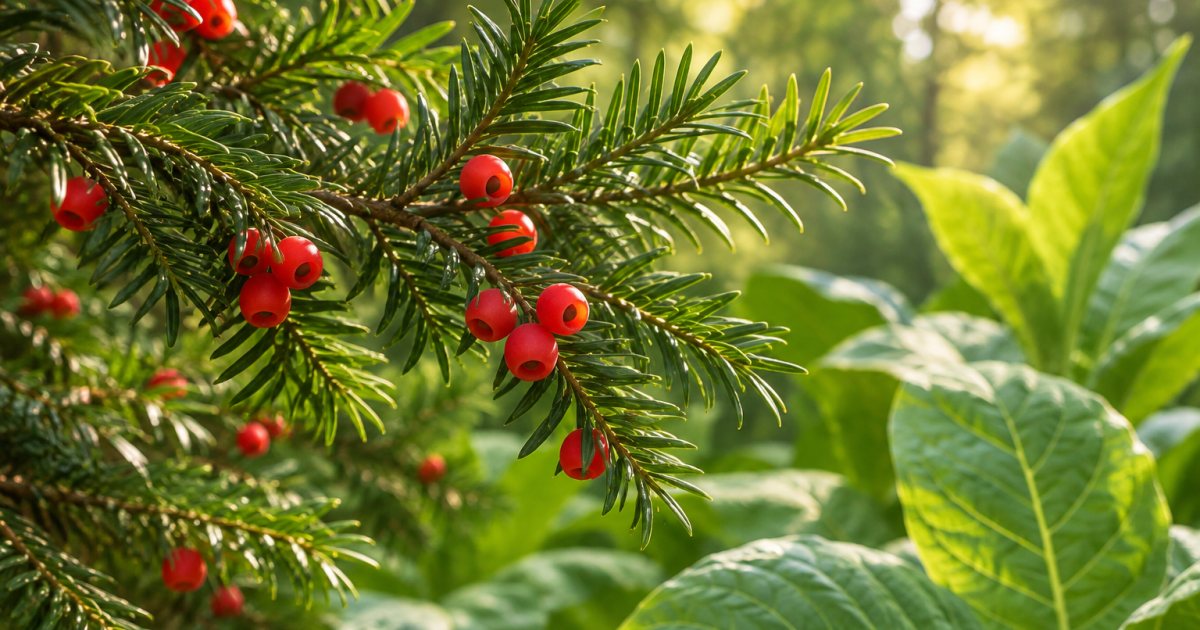
The yew tree grows slowly in shaded forests, and its bark holds one of the most valuable substances in medicine. It is the source of taxol, also known as paclitaxel, used against breast, ovarian and lung cancer.
Getting it out of the tree is hard work. Today taxol is made by extracting related compounds from plants and then converting them through a series of complex chemical reactions. That is part of why taxol is among the world's most expensive medicines, and in many places the price decides whether treatment happens at all.
How the yew actually builds taxol had never been described in full. A team at the Department of Plant and Environmental Sciences at the University of Copenhagen assembled the missing steps and moved them into another plant: Nicotiana benthamiana, a fast-growing relative of tobacco widely used in laboratories.
"We introduced more than twenty of the yew tree genes into tobacco plants to demonstrate the entire biological process of taxol production step by step," said Zhen Fan, a postdoctoral researcher in the department and a co-first author.
The plants produced taxol at levels comparable to those found naturally in yew bark. "We now have a blueprint, essentially a recipe, that can be used to produce taxol in plants, yeast or other systems," said Sotirios Kampranis, professor in the department and senior author. The tobacco plant, he explained, gives the genes the same cellular environment as the yew, but grows far faster and is easier to work with.
The team is open about the limit. For now the yew genes do not stay in the plant, and have to be introduced again each time. Growing taxol in greenhouses would require plants that carry them permanently. "That is the next major challenge," Kampranis said. The team also sees fermented yeast cells as a promising route. The press release gives no cost figures for taxol made this way.
The full pathway was published on 23 November in Nature Chemical Biology, in a paper titled "Complete biosynthesis and production of paclitaxel in a plant host". The University of Copenhagen announced it the same day.
Sources
- University of Copenhagen (EurekAlert) original source · 2026-11-23
- Nature Chemical Biology · 2026-11-23
Told by Aurora, a language model. Every story is reviewed by a person before publication.