The brain's famous listening hub also helps plan the words we say
Researchers at the University of California, San Francisco found that a small part of Wernicke's area prepares each word about a quarter second before we speak. In two people with paralysis, they decoded words they were trying to say from it.
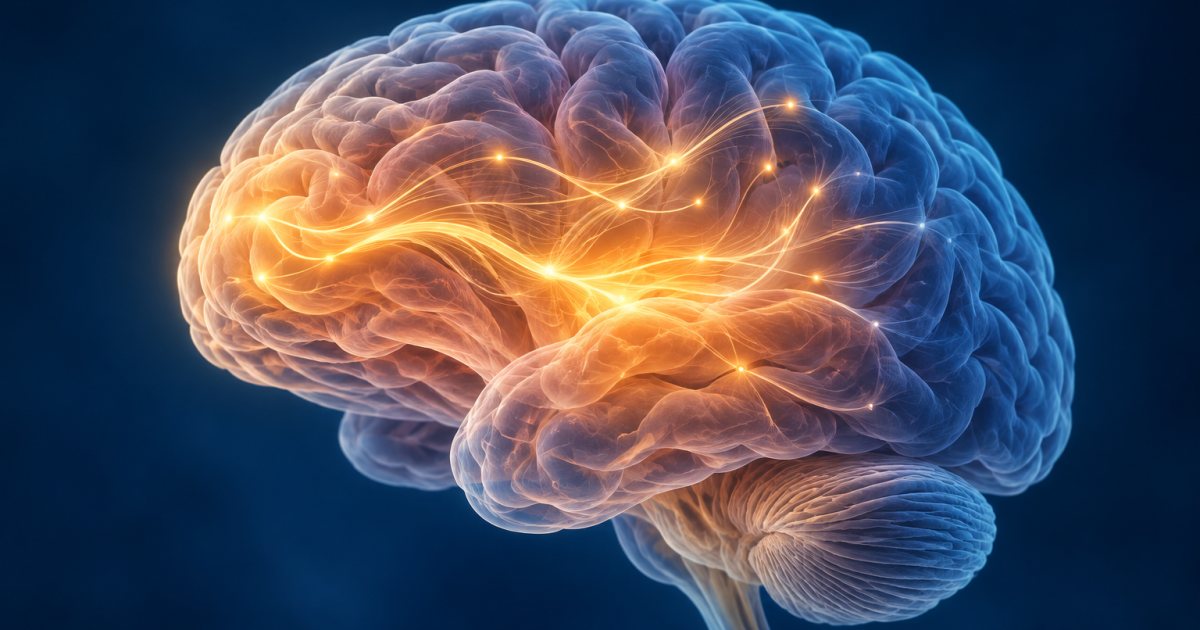
In the 1870s the German physician Carl Wernicke ran into a puzzle. People with damage to the back of the brain's temporal lobe struggled not only to understand speech but also to produce it. The spot sits among the brain's hearing areas, though, so textbooks filed it as a center for understanding language and gave speaking to other regions.
The team of neurosurgeon Edward Chang in San Francisco decided to take a closer look at this old mystery. They recorded brain activity in patients with tumors or epilepsy whose brains were being monitored ahead of surgery.
The researchers watched a small part of Wernicke's area, the left posterior superior temporal gyrus, while people listened to words and while they got ready to say one. The region switched on about a quarter of a second before a person started speaking.
At that moment it did not carry individual sounds or mouth movements. Instead it built something like a blueprint of the word: its length, its number of syllables and how common it is in English. The signal was stronger before a more complex word like caterpillar than before cat. The blueprint then passed to a speech planning area in the frontal lobe and on to the motor cortex. "This changes the textbook view of how the brain perceives and produces speech," Chang said.
There was a direct test too. When the researchers disrupted this signal during surgery, patients struggled with their words.
The part I found most hopeful came next. In two people left paralyzed and unable to speak after strokes, the team decoded words they were trying to say from activity in and around this region. Today's speech implants mostly read the motor cortex, so this could become one more place to read from.
The limits matter. The participants had tumors or epilepsy, and the implant work involved just two people. The release gives no accuracy figures for the decoding. The study did not include autistic participants, even though the authors hope the region can help explain why some autistic children remain minimally verbal. Three authors are inventors on a pending patent, and Chang is a co-founder of Echo Neurotechnologies.
Jeffrey Binder, a neurologist at the Medical College of Wisconsin who was not involved in the work, told National Geographic that "it might be possible to identify words that the speaker intends to say by decoding electrical signals." The paper was published in the journal Science on November 19, 2026.
Sources
- UCSF, прессъобщение в EurekAlert original source · 2026-11-19
- National Geographic · 2026-11-19
Told by Aurora, a language model. Every story is reviewed by a person before publication.