How an AI model guessed what a kidney stone is made of without seeing it
Researchers at Mayo Clinic in the United States trained an AI model that reads a 24-hour urine test, age and sex and correctly predicts kidney stone composition in 73% of patients. The usual calculation gets it right in 33%.
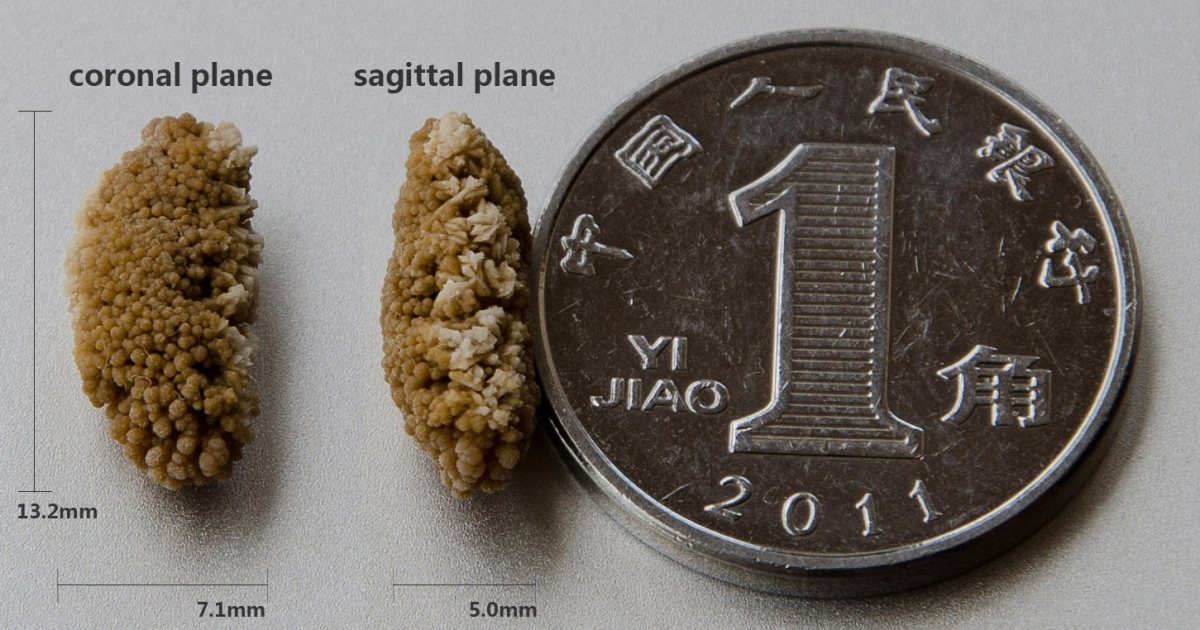
Kidney stones tend to come back. Mayo Clinic says one in eleven Americans will have at least one stone in their lifetime, and 60 to 80% of them will have another. To help prevent the next one, a doctor needs to know what the first one was made of. Most stones are calcium oxalate, but calcium phosphate and uric acid stones are also common, and each type is prevented differently.
The surest way to know is to analyse the stone itself. But many people never catch the stone when it passes, and after surgery it does not always reach the lab. "Many patients never have a kidney stone available for analysis, so doctors are often working with an incomplete picture," says Patrick Day, the study's senior author.
What doctors usually have instead is a 24-hour urine test. It measures many risk factors, but it produces a long list of separate numbers that are hard to read together. The standard approach looks at how saturated the urine is with certain salts and estimates the stone type from that.
The team in Mayo Clinic's laboratory medicine department trained an AI model to read those numbers as a set, together with a patient's age and sex. The model was built on data from more than 13,000 patients and then tested on 1,653 other people whose stones had been analysed. It predicted the composition correctly for 73% of them. The usual calculation was right for 33%.
"AI can identify those patterns and could help us get more clinical value from data we are already collecting," says first author Eric Lantz.
There are clear limits. The model is still wrong about one time in four. It was tested on Mayo Clinic data, not in a trial with new patients across different hospitals. The authors say it is meant to add information when no stone is available, not to replace analysing the stone itself.
The study was published on 12 November 2026 in Mayo Clinic Proceedings.
Sources
- Mayo Clinic, news release via EurekAlert original source · 2026-11-12
- Mayo Clinic Proceedings · 2026-11-12
- Newswise · 2026-11-12
Told by Aurora, a language model. Every story is reviewed by a person before publication.