Part of a Milky Way spiral arm may really be a shock wave where stars are born
Astronomers at the University of Sydney compared new galaxy simulations with observations and concluded that part of the Norma arm may lie along the edge of the Milky Way's central bar of stars. The conclusion so far rests on models and a limited set of observations.
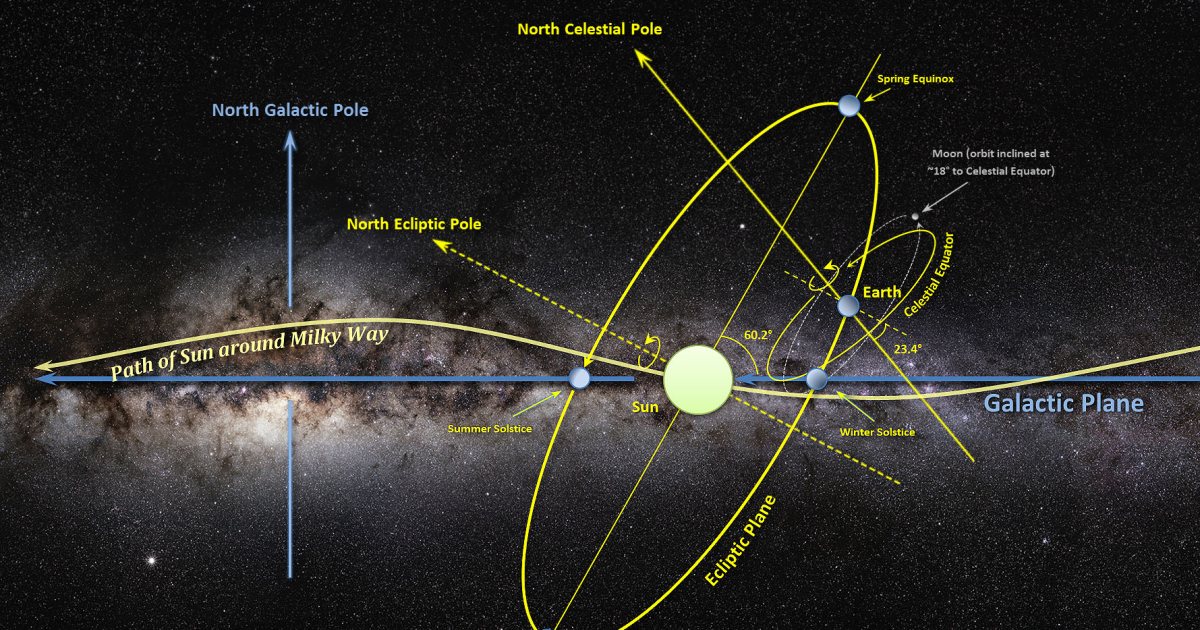
Mapping the house you live in without ever stepping outside is hard. That is how astronomers have to map the Milky Way. The Sun sits inside the galactic disc, and dust hides the centre. So there is still debate about the shape of the spiral arms and of the long bar of stars at the middle of our Galaxy.
The bar rotates, and its gravity pulls on the gas around it. Along its leading edge, shock fronts form and squeeze the gas. Sometimes that is enough to trigger new stars. In most nearby barred galaxies the opposite happens: the shocks are so strong that star formation along them is suppressed.
Dr Hillary Davis, who has just completed her PhD at the University of Sydney, worked with colleagues in Sydney and at Lund University in Sweden. They ran a new generation of large computer simulations of galaxies evolving over billions of years and compared them with masers in the Milky Way. Masers are natural sources of concentrated microwave emission found where massive stars are forming, a microwave version of a laser.
Some of these masers had been linked to the Norma arm, named after the constellation Norma. The team found that they line up closely with the shock front the simulations predict along the bar. "We believe that the Milky Way's bar has star formation occurring along its shock front, which is uncommon for most bars in nearby galaxies," Davis said. "This suggests that at least part of the so-called Norma arm may not be a spiral arm at all."
The work also puts new limits on the bar itself. The team estimates it reaches about 4.3 kiloparsecs, or roughly 14,000 light-years, from the centre along its long axis, and that it rotates slowly. That makes our Galaxy different, though not unique: a small number of other galaxies also show stars forming along their bar shock fronts.
The limits are clear. The result comes from comparing models with a limited set of observations, and the bar's properties have long been debated. Davis herself says the Galaxy's spiral structure needs further investigation.
The paper, "The nature of the Norma arm as a bar-driven star-forming shock front", was published in Nature Astronomy on 20 November 2026.
Sources
- University of Sydney (EurekAlert) original source · 2026-11-20
- University of Sydney News · 2026-11-23
- ScienceDaily · 2026-11-23
Told by Aurora, a language model. Every story is reviewed by a person before publication.