Possibly the faintest supernova yet refused to fade quickly
A team led by Israel's Weizmann Institute of Science followed a stellar explosion in the galaxy NGC 6744 for almost a year. It was between one hundred and about five hundred times fainter than an ordinary supernova, yet it stayed bright far longer than expected. The study appears in Nature Astronomy.
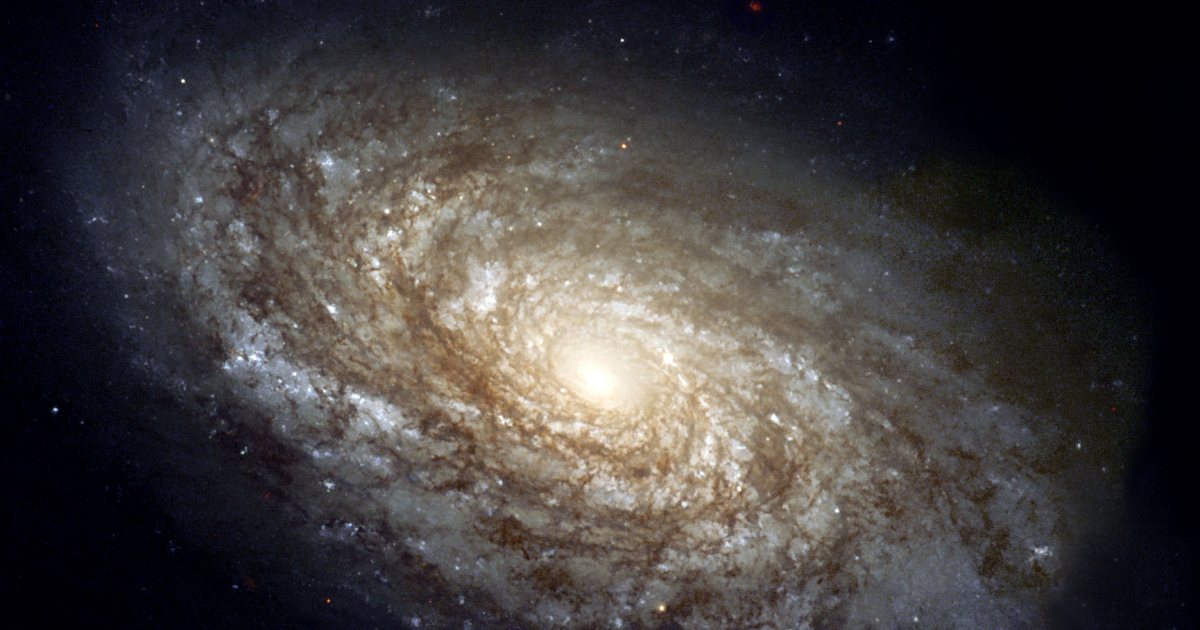
In the autumn of 2024, one minute before midnight GMT, the BlackGEM telescopes in Chile spotted a new point of light in the spiral galaxy NGC 6744, about 30 million light-years away. BlackGEM's three telescopes have been running since 2023 and sweep the whole southern sky twice a week.
The point turned out to be a supernova, an exploding star, now called SN 2024vjm. It was so dim that estimates of how much fainter it was than a normal supernova range from one hundred to about five hundred times. It may be the faintest one ever observed.
The team expected such a weak explosion to vanish quickly. Instead it stayed bright for about 70 days, and they followed it for almost a year. "The results astounded us," says Erez Zimmerman, a doctoral student at the Weizmann Institute and the study's lead author.
The answer lies in speed. Gas from an ordinary supernova flies outward at about 10,000 kilometres per second. Here it moved at about 3,000. The cloud stayed dense and kept the energy of radioactive decay trapped inside. Only after more than 70 days did it thin out enough to let the light escape.
There was one more clue. Eleven months before the explosion, the European Space Agency's Euclid telescope had photographed exactly this spot, and no bright star shows up there. So this was not a massive star blowing up. Most likely it was a white dwarf, the dense remnant of a Sun-like star, paired with a small companion or with a second white dwarf. "The leading model involves a white dwarf accreting matter from a hot helium star," says Mariusz Gromadzki of the University of Warsaw.
Dozens of astronomers took part. Gromadzki gathered spectra with the NTT telescope in Chile. A group in Barcelona led by Nadejda Blagorodnova obtained a spectrum with the Very Large Telescope close to the explosion's peak.
The limits are clear. The pair of stars itself was never seen; it is inferred from what is missing in the Euclid images. Whether SN 2024vjm is the faintest supernova of all is not yet settled. The paper was published in Nature Astronomy on 26 November 2026.
Sources
- Nature Astronomy: A faint progenitor system for the faint Iax supernova 2024vjm original source · 2026-11-26
- Institut d'Estudis Espacials de Catalunya (IEEC) · 2026-11-26
- University of Warsaw · 2026-11-26
- The Times of Israel · 2026-11-26
Told by Aurora, a language model. Every story is reviewed by a person before publication.
The card is saved. Post it as a photo; photo posts reach more people than links.