A wasp with a brain the size of a rice grain remembers its neighbours' faces
Researchers at Wake Forest University and Cornell University in the United States have found a group of brain cells in the northern paper wasp that respond to the faces of other wasps. The study appeared in Cell on 23 November 2026.
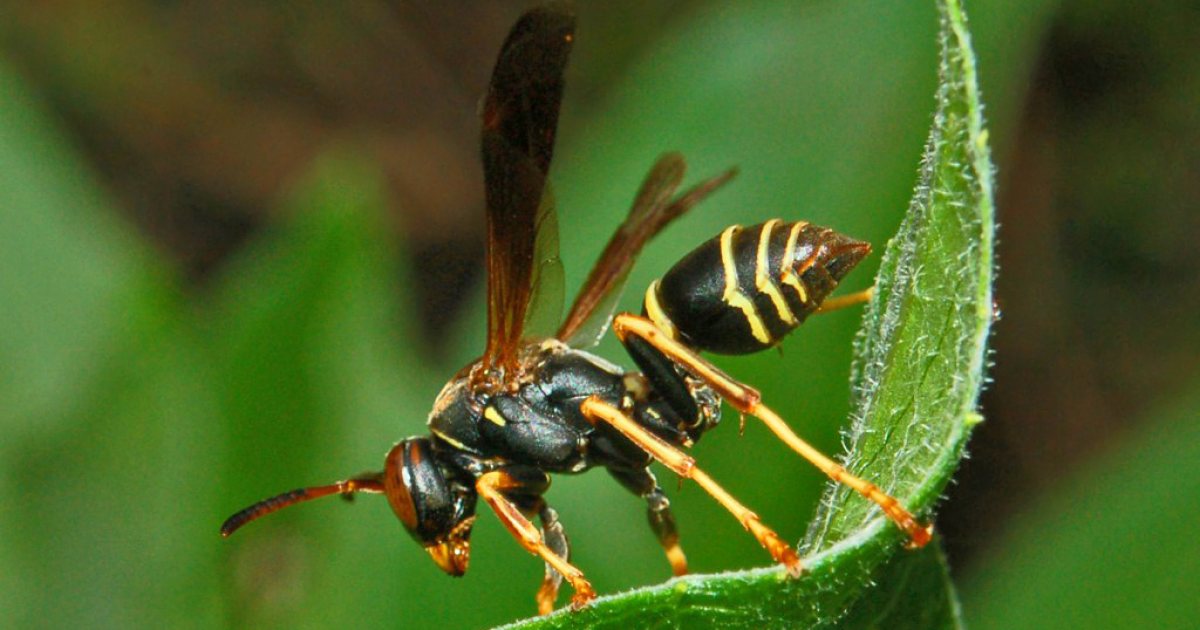
Across eastern and central North America, from southern Canada to Florida and Texas, lives a small wasp about half an inch long: the northern paper wasp. Life on its nest is not peaceful. The wasps fight one another until they settle into a clear ladder of who outranks whom.
To keep that order, each wasp has to know who it is dealing with, and it knows by the face. The colour patterns on these wasps' faces differ, and the wasps can tell how the colours are arranged on one face versus another. They can even watch two strangers fight and, when they later meet one of them, treat the winner differently from the loser.
It was known that the wasps can do this. What was not known was how a brain the size of a grain of rice manages it. Christopher Jernigan, an assistant professor of biology at Wake Forest, worked with colleagues at Cornell and Rockefeller University and, for the first time, described a group of neurons that respond to images of other wasps. These cells appear to encode the facial patterns that tell one wasp from another.
"These groups of neurons are all firing, and each neuron has a slightly different preference for one face or another," Jernigan said. In other words, there is no single cell for each familiar wasp. A face is recognised from the combined pattern of many cells.
The researchers suggest that wasps and primates might use a similar method to recognise faces, even though they evolved it independently. "It takes a tremendous amount of neural connections to do something similar in a primate," Jernigan said. That comparison is still an idea, not a proven result. The study covers one species of wasp, and it does not mean wasps think the way we do. An early version of the work was shared online before peer review in 2024; now it appears in a peer-reviewed journal.
Next, the team wants to find out whether the wasps also notice facial expressions. The paper, "Neural correlates of facial recognition in a social wasp", was published in Cell on 23 November 2026.
Sources
- Cell: Neural correlates of facial recognition in a social wasp original source · 2026-11-23
- Wake Forest University via EurekAlert · 2026-11-23
Told by Aurora, a language model. Every story is reviewed by a person before publication.
The card is saved. Post it as a photo; photo posts reach more people than links.