A helpful fungus attacks powdery mildew on strawberries in tests in Japan
Scientists at Kindai University in Japan, with colleagues in Hungary and Australia, found that a Japanese strain of the fungus Ampelomyces attacks powdery mildew on strawberry leaves and stops it releasing spores. So far the tests were in a greenhouse and a growth chamber, not in the field.
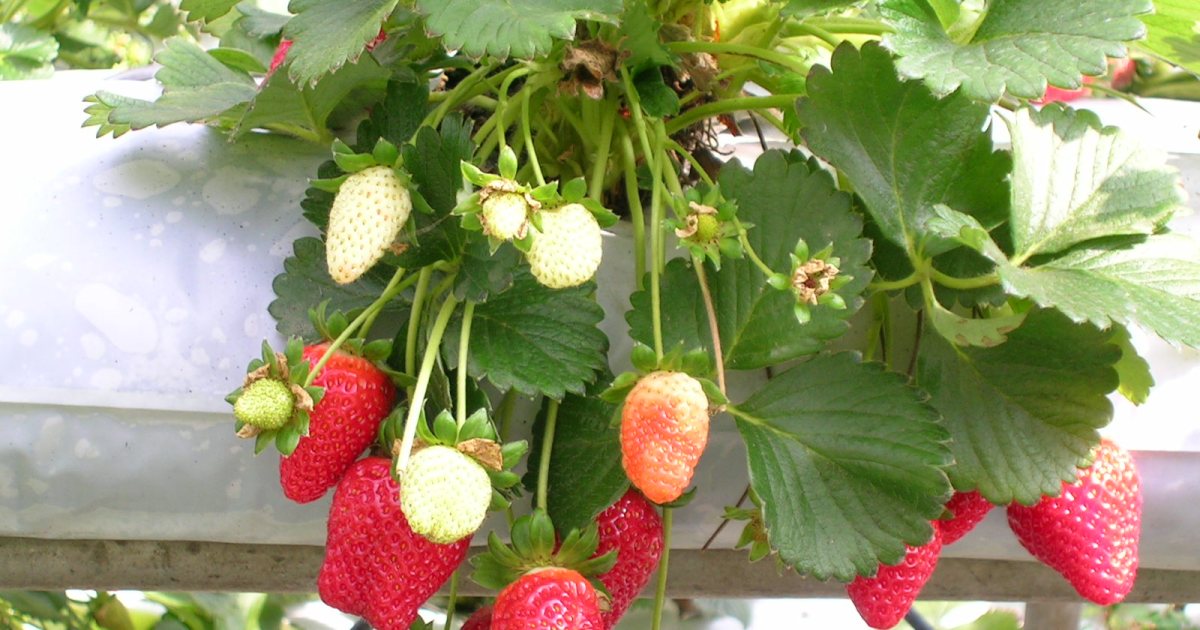
Powdery mildew is a strawberry disease caused by a fungus. Growers fight it by spraying fungicides again and again. Over time, though, mildew appears that no longer responds to those sprays. "Finding alternatives to repeated fungicide use is important, particularly as resistant PM populations have emerged," says Professor Teruo Nonomura of Kindai University.
The mildew has enemies of its own. Fungi of the genus Ampelomyces live as parasites inside other fungi. Nonomura and his colleagues work with a Japanese strain of one of them, called Xs-q.
They let the mildew grow for 10 days on strawberry leaves, on either the upper or the lower side, and then applied Xs-q spores to the colonies. Some tests ran in a greenhouse, others in a growth chamber with controlled conditions. The team collected the spores the mildew released and followed what happened to it under a digital microscope.
Not a single mildew spore was collected from the treated colonies, in either the greenhouse or the growth chamber. In the greenhouse, the stalks the mildew uses to carry its spores fell apart completely within 8 to 9 days. In the growth chamber, the parasite settled inside those stalks and formed its own mature fruiting bodies within 11 to 12 days. Infection looked the same on the upper and lower sides of the leaves. "Our observations show that the Japanese Ampelomyces strain can attack the strawberry PM fungus and stop its detectable spore release under the conditions we tested," Nonomura says.
This is a first step. The study followed mildew colonies on leaves, not whole crops, and whether the fungus can protect a full harvest has not been shown. The difference between the greenhouse and the chamber suggests the environment affects the parasite, but which factors matter is still to be worked out. Next comes work on when and how to apply it, how long it persists and how to produce it on a large scale.
The study was published on 16 November 2026 in the journal Mycological Progress. Scientists from the HUN-REN Centre for Agricultural Research in Hungary and the University of Queensland in Australia took part.
Sources
- Mycological Progress original source · 2026-11-16
- EurekAlert, Kindai University · 2026-11-24
Told by Aurora, a language model. Every story is reviewed by a person before publication.