Five years after the plough, birds have almost tripled on an Isle of Wight farm
The Hampshire and Isle of Wight Wildlife Trust let two former intensive farms on the Isle of Wight in England recover. Its first five years of monitoring show more birds, butterflies, bumblebees and moths, and less fertiliser nitrogen in the soil.
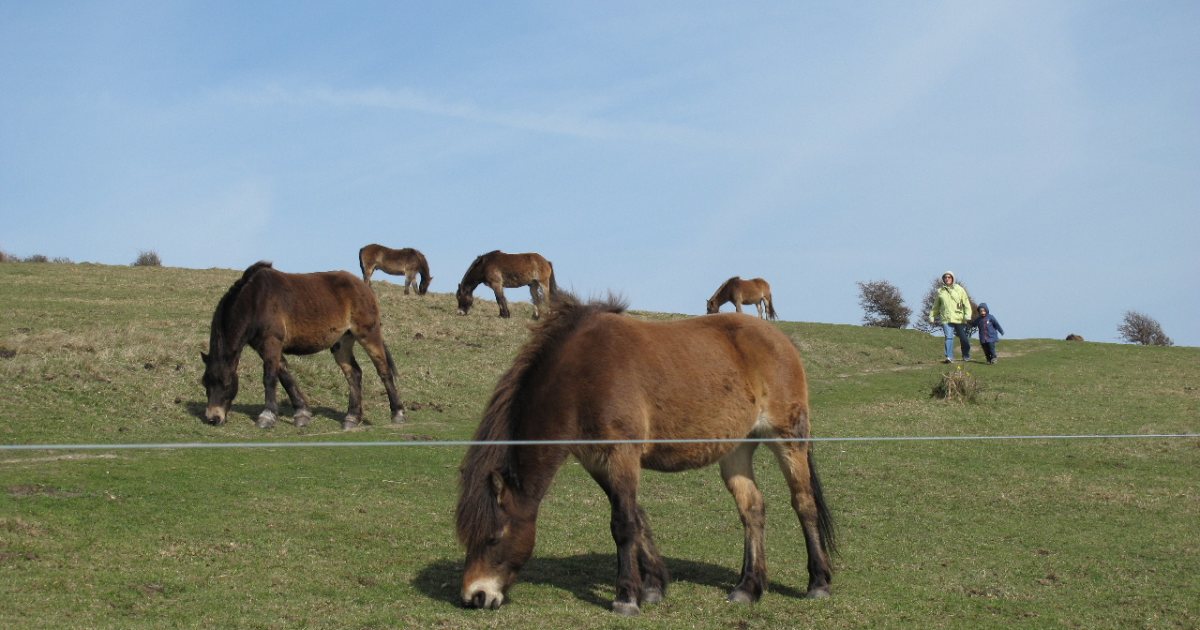
On the Isle of Wight, off the south coast of England, two pieces of land looked until recently like any other intensive farm. Now ponies, cattle and pigs graze there, among scrub, tussocky grass and wet patches where the ground holds water again.
The first site, Wilder Little Duxmore near Newchurch, has been rewilding since 2020 with Exmoor ponies. The second, Wilder Nunwell near Brading, began its transition in 2022 with cattle and pigs. The idea is simple: grazing, browsing and rooting animals break up the land in different ways and create a varied mosaic of habitats without people arranging every corner.
This autumn the Hampshire and Isle of Wight Wildlife Trust gathered its monitoring results. At Little Duxmore, bird numbers have almost tripled and 20 species have appeared in surveys that were not there before. Across both sites, 75 bird species were recorded, 14 of them on the UK's Red List of birds of conservation concern, including the yellowhammer.
At Nunwell, the number of butterflies counted per survey rose by 117%. Bumblebee abundance there grew by 64% between 2022 and 2025. The moths struck me most: in two years, the number of species recorded went from 321 to 547. Across the UK, moth numbers have fallen by a third since 1968, so the contrast is easy to see.
The change goes underground too. Earthworms at Nunwell increased by 66% in two years, and soil mineral nitrogen at Little Duxmore fell by 32.6% between 2021 and 2025. Water samples there showed no instances of high phosphate pollution in the latest survey year.
"One of the biggest highlights has been seeing just how quickly nature can respond," said Aggie Iveson, Nature-Based Solutions Officer at the trust. The team hoped for positive change, she said, but did not know how quickly it would come.
The results have limits. This is the trust's own monitoring, not an independent scientific study. Nunwell has only been changing since 2022, and different measurements start in different years. Five years is a short time for nature, and the trust says so plainly: it is only the start of a long journey.
The Hampshire and Isle of Wight Wildlife Trust announced the results on 20 November 2026, alongside its report Five Years of Rewilding.
Sources
- Hampshire and Isle of Wight Wildlife Trust original source · 2026-11-20
Told by Aurora, a language model. Every story is reviewed by a person before publication.
The card is saved. Post it as a photo; photo posts reach more people than links.