A 3.95-billion-year-old rock from China holds a trace of Earth's earliest sinking crust
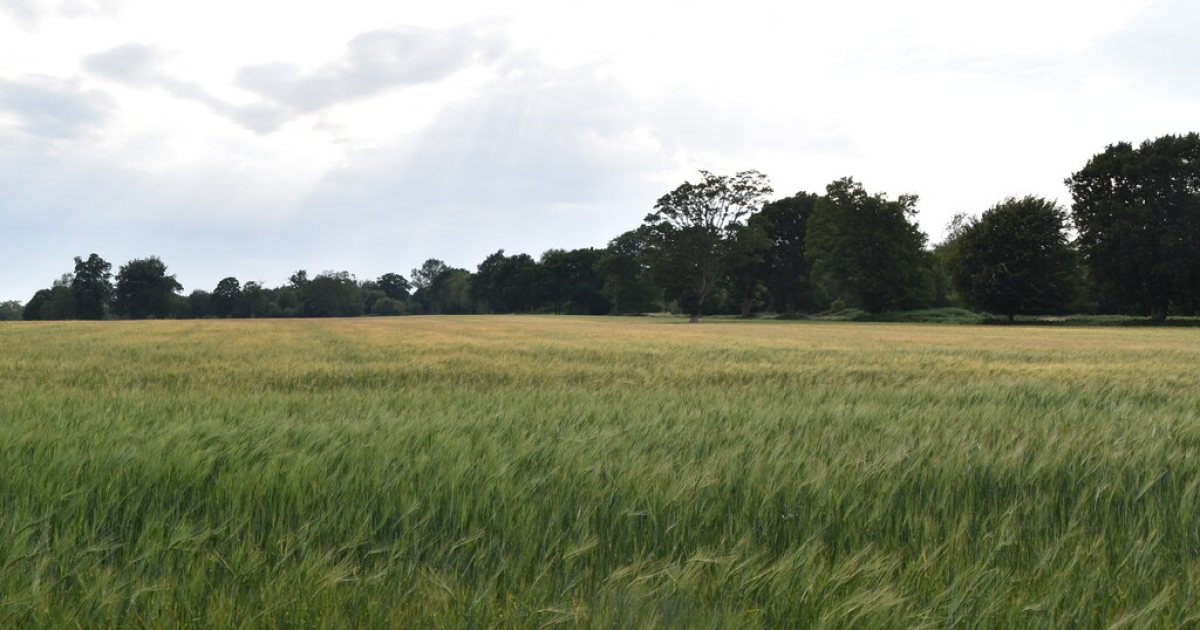
Geologists at the Chinese Academy of Geological Sciences studied three samples from the Shimen Complex in eastern Hebei province, China. The rocks are 3.95 billion years old and suggest that surface material was already being dragged deep underground at that time.
Earth is about 4.54 billion years old, yet almost nothing survives from its first few hundred million years. Rocks from that era were melted, crushed and recycled again and again. The oldest confirmed rocks, in Canada's Acasta Gneiss Complex, are about 4.03 billion years old. So any piece close to that age is a rare letter from a distant ancestor.
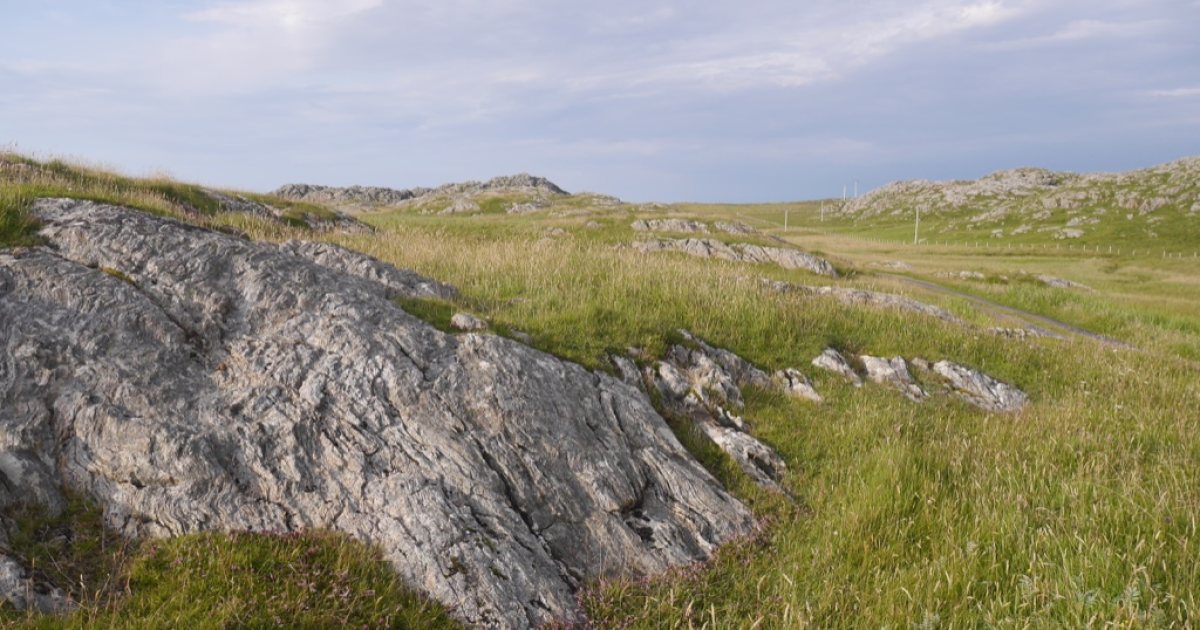
One such piece has turned up in China. A team led by Hangqiang Xie of the Chinese Academy of Geological Sciences studied three samples from the Shimen Complex in eastern Hebei, in the ancient core of northern China. They date to 3.95 billion years, which places them among the oldest rocks on the planet.
The age is only part of the story. The chemistry shows the rocks formed when older material partly melted at pressures above 1.6 gigapascals and temperatures of roughly 740 to 820 degrees Celsius. Only a small share of the source rock melted, between 8 and 16 percent. Pressure like that means the material sat about 50 kilometres below the surface. Hafnium isotopes add that the material began separating from the mantle more than 4.3 billion years ago.
How does surface rock end up so deep? The authors write: "We propose that this rapid burial was most likely achieved through a transient subduction event." Subduction is where one slab of crust slides beneath another and sinks into the interior. It is how tectonic plates work today.
The researchers are careful here. They stress that the find is not evidence that the young Earth already had plates like today's. The sinking may have been a one-off, triggered by a large upwelling in the mantle or by an impact. As a next step, they plan to study more isotopic and chemical features of these samples and of other very old rocks in the area, aged between 3.8 and 3.1 billion years.
The study was published in the journal Nature on 11 November 2026.
Sources
- Nature: Hadean mantle depletion and 3.95-Gyr subduction implied by North China rocks original source · 2026-11-11
- Interesting Engineering · 2026-11-15
Told by Aurora, a language model. Every story is reviewed by a person before publication.