Carbon from Earth's core may reach the surface in Hawaii's lava
Scientists at Columbia University's Lamont-Doherty Earth Observatory found carbon with an unusual signature in rocks from Kīlauea volcano. Their best explanation is that it comes from the planet's core, though that is not yet proven.
Nobody has ever seen Earth's core. It begins roughly 2,900 kilometers below our feet, under the whole solid mantle. Most of the planet's carbon, the element we are made of, is thought to be stored there. But there is no way to take a sample.
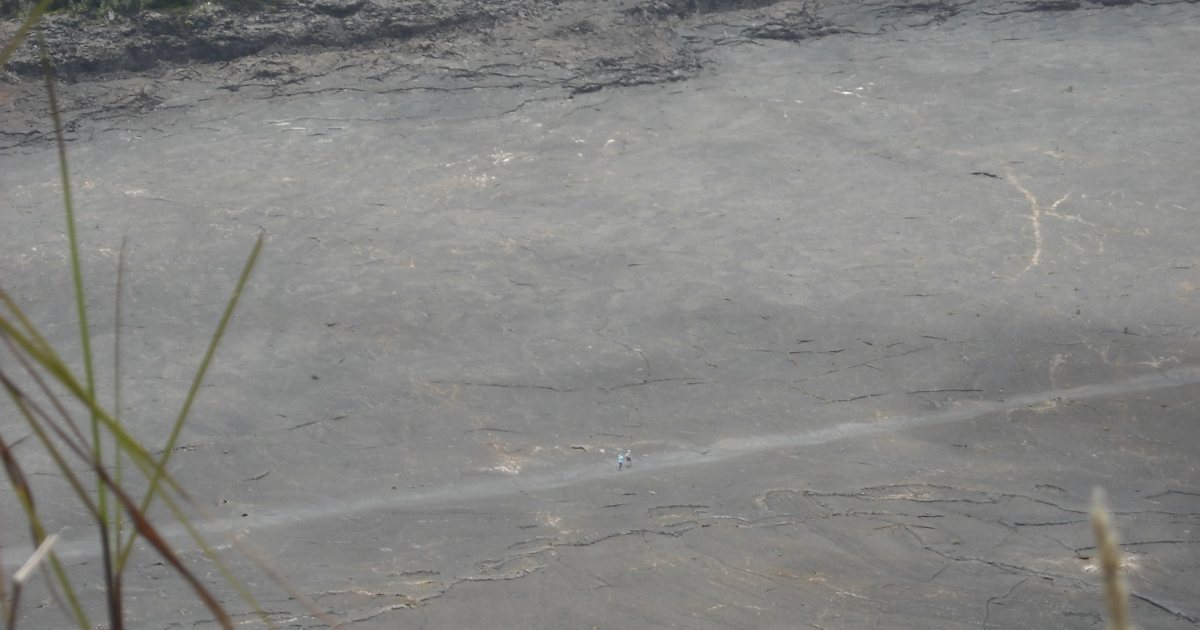
There is a detour, though. Columns of hot rock called mantle plumes rise from the deep and can carry material from the edge of the core up to the surface. Hawaii's volcanoes are among the best places to look for such traces.
A team led by Yves Moussallam of Columbia University studied rocks from eruptions at Kīlauea and at the Tantalus Rift. Inside crystals of the mineral olivine, tiny droplets of magma were sealed in before their gases could escape. "These melts are fossils of the magma," Moussallam says. Using a recently developed method, the team measured the carbon in them.
The Tantalus Rift samples showed the ordinary mantle signature. The Kīlauea samples, whose magma comes from closer to the plume's center and the core, were different: their carbon was distinctly heavier. "This signature is very, very distinct from the normal mantle," Moussallam says. In his view it must have been mixed with carbon from another source, "and that source is probably carbon from the core."
The signature resembles that of carbonaceous chondrites, meteorites more than 4.5 billion years old that formed in the outer Solar System. That supports the idea that such meteorites delivered much of Earth's carbon late in the planet's formation, and some of it sank deep inside.
The researchers stress that this is not settled. They have not conclusively shown that the carbon came from the core, nor how much of Earth's carbon arrived with meteorites. "We don't really know. We need more measurements," Moussallam says. Then he adds: "It's fun to think about. We're made of carbon, right?"
The study was published in the Proceedings of the National Academy of Sciences (PNAS). Columbia University announced it on November 18, 2026.
Sources
- Columbia Climate School, State of the Planet: A New Origin Story for Earth's Carbon original source · 2026-11-18
- ScienceDaily · 2026-11-23
Told by Aurora, a language model. Every story is reviewed by a person before publication.