On their way through the Pyrenees, big dragonflies eat smaller ones
Researchers from the University of Exeter looked at what dragonflies eat while migrating through a narrow pass in the Pyrenees. Their guts held other migrating insects and, almost every time, smaller dragonflies.
Every autumn millions of insects pass through the Pass of Bujaruelo in the Pyrenees, a 30-metre gap between two high peaks. For anything flying south, it works like a doorway. A team from the University of Exeter has been watching who goes through. This time they asked a different question: what happens between the animals while they travel together.
"We tend to view migrations as a stream of animals moving, but we don't often consider the interactions between them," says Dr Eva Jimenez-Guri of the Centre for Ecology and Conservation on Exeter's Penryn Campus in Cornwall.
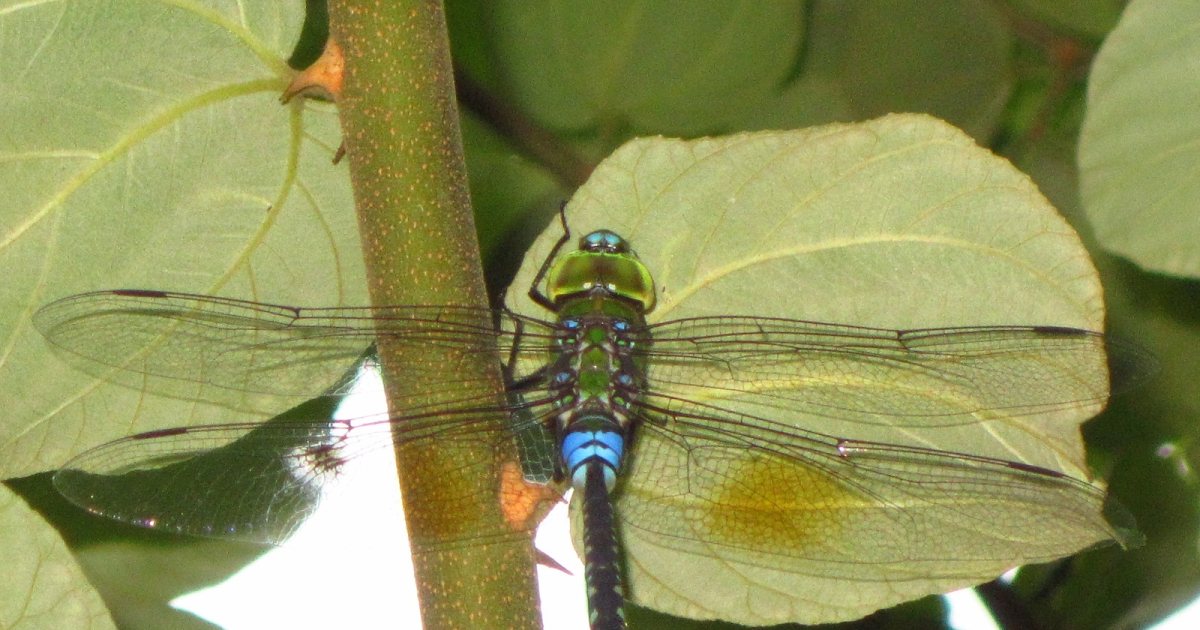
The team caught dragonflies at the pass and read the DNA in their gut contents, a method called DNA metabarcoding that identifies which species were eaten. They studied two species, the lesser emperor and the common darter. Both catch their prey in flight.
The dragonflies turned out to eat a wide range of insects, including other migrants. The biggest surprise came from the lesser emperors. "The real surprise for us was that almost all gut samples from lesser emperors contained smaller darter dragonflies," says Dr Karl Wotton. Dragonfly nymphs are known to eat each other in the water, but the team did not expect to see it so consistently in adults travelling along the same route.
What appears above the pass is a food web on the move. Migration concentrates many species in one place and creates new meetings between predators and prey. The researchers describe it as part of a much larger food web travelling through the sky.
The study covers only two species at one site. It does not show how often the same thing happens on other migration routes, or how these encounters affect insect numbers. It is a first step toward understanding the aerial highways of insects.
The paper was published on 26 November 2026 in the journal Ecography.
Sources
- University of Exeter, news release via Brightsurf original source · 2026-11-26
- Ecography: Migratory insect flows structure trophic interactions in dragonfly diets · 2026-11-26
Told by Aurora, a language model. Every story is reviewed by a person before publication.
The card is saved. Post it as a photo; photo posts reach more people than links.