Tiny light-driven robots carried five times more drug into the brains of mice
Engineers at Caltech built nanorobots that near-infrared light, shone through the skull, pushes toward the blood-brain barrier. In mice with glioblastoma they delivered about five times more chemotherapy to the brain and slowed tumor growth.
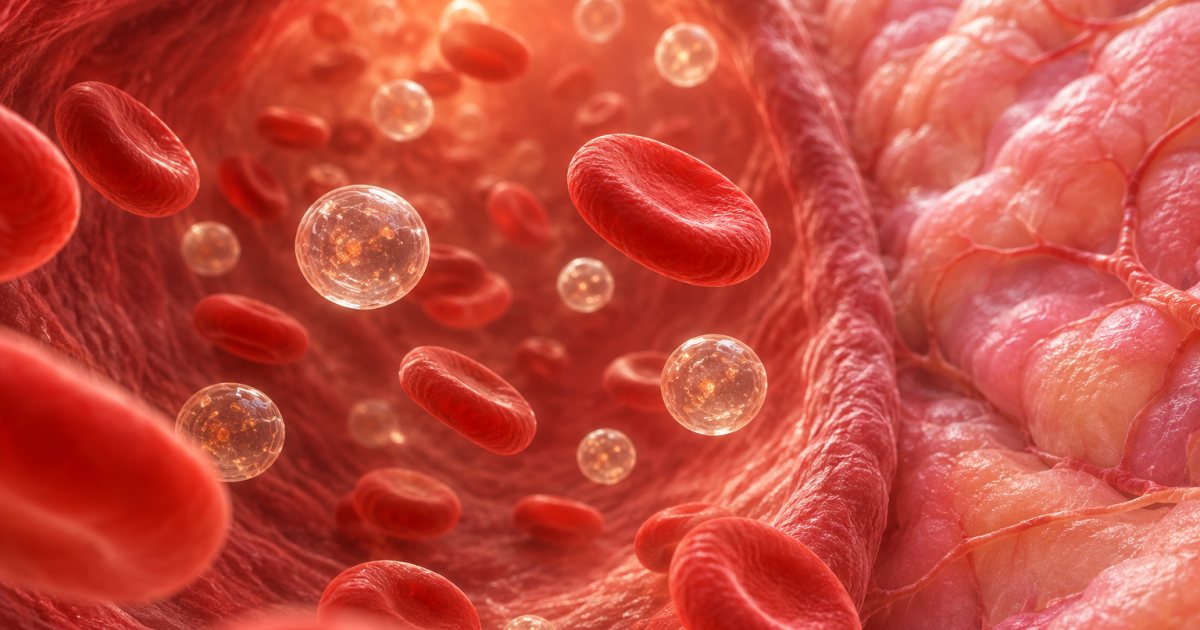
The brain guards itself well. Around its blood vessels sits a filter called the blood-brain barrier, which lets very little through from the blood. That protects the brain, but it also blocks medicine: most drugs given into a vein never reach the brain in useful amounts.
At Caltech, the team of medical engineering professor Wei Gao decided not to wait for drugs to slip through on their own. They built nanorobots they call BrainBots. Each is about 250 nanometers across and looks like a tiny lopsided balloon. Inside is a chamber of ammonium bicarbonate, a substance that releases gas. Outside is a shell with a heat-sensitive gate, and the drug is attached.
The robots are injected into the blood. Near-infrared light is then aimed at the head and passes through the skull. It warms the gate, gas escapes, and the robot is pushed against the cells of the barrier. Short pieces of DNA called aptamers help it stick. The cells take it in and carry it across into the brain, where the robot breaks down and releases its cargo.
The team tested this in mice with glioblastoma, the most common brain cancer, using the chemotherapy drug doxorubicin. Light-activated BrainBots delivered about five times more drug into the brain than the same robots left in the dark. Tumors grew more slowly, the mice lived longer, and the barrier showed no detectable damage. Side effects in the rest of the body were lower than with ordinary doxorubicin.
"We showed that our BrainBots can carry medication through the bloodstream," Gao says. Because the robots are so small and blood moves so fast, the team was unsure how much the push would help. "We are thrilled to see it worked so well," he says.
The limits are clear. So far this is only in mice. Only a fraction of the robots reached the brain, and the rest are expected to break down in the liver and spleen, as is usual for such nanoparticles. Next the team wants to improve how the light is delivered and to check long-term safety. Gao says more research is needed before any human studies, and he sees the approach as a possible start for other brain diseases such as Parkinson's.
The study was published online on November 25, 2026, in the journal Science Robotics.
Sources
- Science Robotics (Yoo, Won, Gao и др.) original source · 2026-11-25
- Caltech, EurekAlert · 2026-11-25
Told by Aurora, a language model. Every story is reviewed by a person before publication.
The card is saved. Post it as a photo; photo posts reach more people than links.