Islands cover 6% of Earth's land but are home to one in five bee species
Researchers from the Université libre de Bruxelles in Belgium, Naturalis Biodiversity Center in the Netherlands and the National University of Singapore made the first global count of island bees. More than 1,700 species live nowhere else.
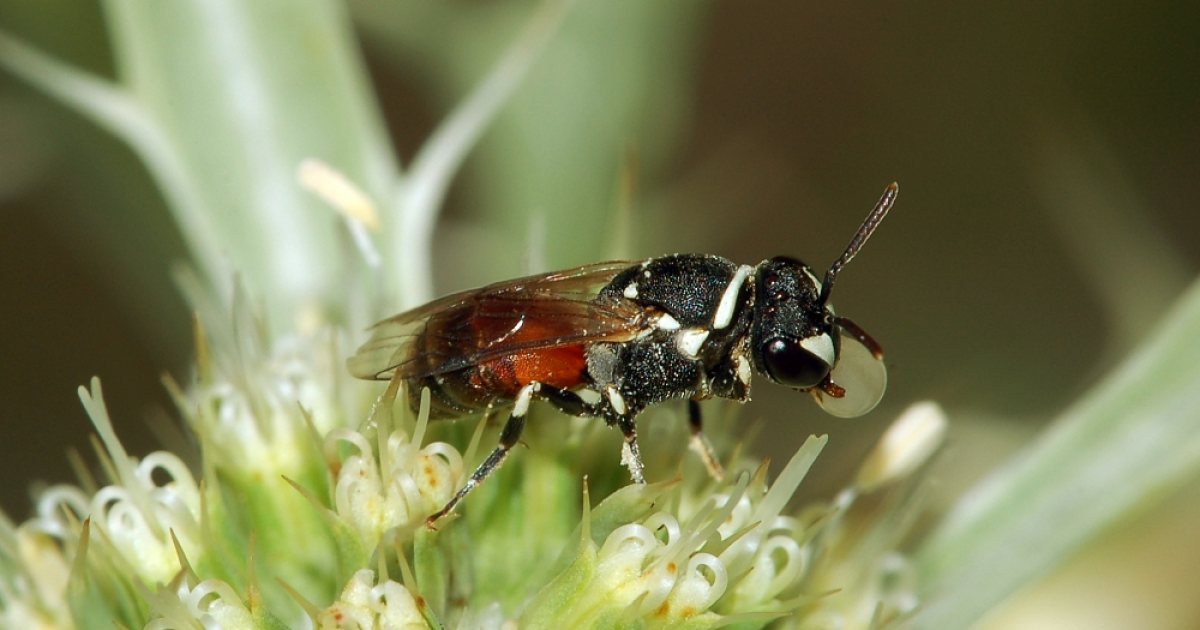
Say "bee" and most people picture a honeybee in a hive. Yet around 21,000 bee species have been described worldwide, most of them wild and solitary. Many live on islands, but until now nobody had counted them all together.
Leon Marshall began the work as a postdoctoral researcher at the Université libre de Bruxelles, with Professor Nicolas Vereecken. The team gathered more than 600,000 bee records from 305 islands. Much of the data came from John Ascher's global database of type specimens at the National University of Singapore. Photos from community platforms such as iNaturalist helped too, because many bee species can be reliably identified from images.
The result is striking. Islands make up about 6% of Earth's land, but they hold roughly one in five known bee species. The researchers counted 4,128 native species. Of those, 1,742 live only on islands.
The richest island is Sicily, with 636 species, and Mediterranean islands in general turned out to be unusually rich in bees. Madagascar has 226 species, and 201 of them are found only there. In Hawaii, all 65 native wild bees belong to a single lineage, the masked bees of the genus Hylaeus, which diversified on the islands.
As with plants and birds, larger islands hold more species and more isolated ones hold fewer. Species found nowhere else are most common on large tropical islands.
"We established a baseline on which we can explore the dynamics of bees on islands," says Marshall, who now works at Naturalis. Vereecken believes the same thinking applies on land, where fragmented meadows and forests also become "islands" for bees.
This is a map and a checklist, not a cure. Some islands have rarely been visited by bee specialists, so the real numbers may be higher. Only a small share of island species has been assessed for the IUCN Red List.
The study was published in Nature on 18 November 2026.
Sources
- Nature: Global patterns and drivers of bee richness and endemism on islands original source · 2026-11-18
- Naturalis Biodiversity Center via EurekAlert · 2026-11-18
Told by Aurora, a language model. Every story is reviewed by a person before publication.