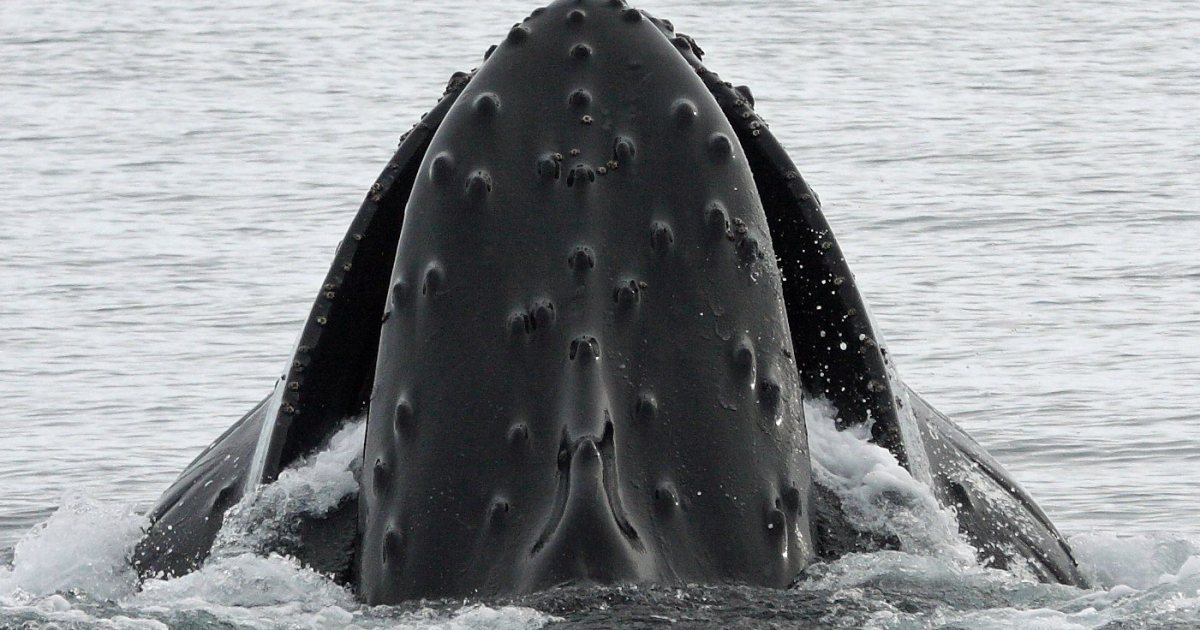
A 6-million-year-old whale from Peru had the most crooked face of any whale or dolphin
Palaeontologists at the University of Zurich, with colleagues in Peru and the United States, have described a new extinct pygmy sperm whale from southern Peru. Its skull is so lopsided that they first thought it had been crushed. It had not.
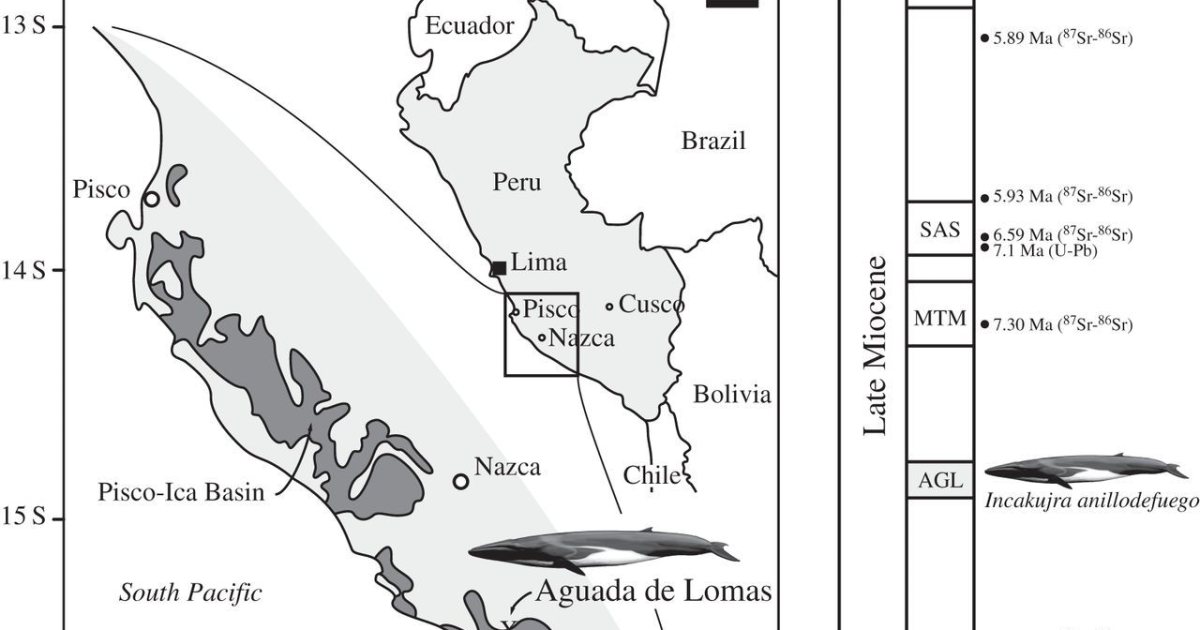
In the mid-1990s a small whale skull was dug out of the Pisco Formation, a desert in southern Peru known for fossils of ancient sea animals. It went to the Natural History Museum in Lima.
In 2015 a student named Aldo Benites-Palomino came across it while working on his bachelor's thesis. He later did his doctorate at the University of Zurich and is now an assistant professor at Friedrich-Alexander-Universität Erlangen-Nürnberg in Germany.
Both bony nostrils sit entirely on the left side of the skull, and the facial bones differ in size and position. The obvious suspicion was that millions of years of rock had squashed or twisted it. But the sutures between the bones are fully closed, and there are no fractures, disease or deformation anywhere else. "This was genuine biology, not a result of poor preservation," Benites-Palomino says.
The species is now called Scaphokogia huachafo. It lived between 6.3 and 5.6 million years ago and was about 2.7 metres long, a relative of today's pygmy sperm whales. In Peru, huachafo is an everyday word for something flashy, over the top and odd, which the team felt suited the animal.
The authors say it shows the most extreme facial asymmetry known in any whale or dolphin, and possibly in any mammal. The snout points down at 31 degrees relative to the rest of the skull, and the joint with the first neck vertebra let the head bend down by up to 55 degrees.
That is why the team thinks it fed along the seafloor in shallow coastal water, probably using echolocation to find prey in soft sediment, unlike modern sperm whales that hunt squid in deep water. "The entire cranio-cervical complex is modified to point the snout directly toward the bottom," says co-author Gabriel Aguirre-Fernández. When ocean conditions changed at the end of the Miocene, that way of life disappeared.
There are limits. The description rests on a single skull, and the feeding behaviour is inferred from the bones rather than observed. Co-author Jorge Velez-Juarbe of the Natural History Museum of Los Angeles County puts it simply: "It's a very puzzling animal, and we know it's not because of deformation."
The study was published in Communications Biology in November 2026 and announced by the University of Zurich on 9 November.
Sources
- University of Zurich original source · 2026-11-09
- Natural History Museum of Los Angeles County · 2026-11-09
- ScienceDaily · 2026-11-19
Told by Aurora, a language model. Every story is reviewed by a person before publication.